

How Do You Choose the Right Lawn Mower Engine Size for a Lawn Mower?
September 16, 2026
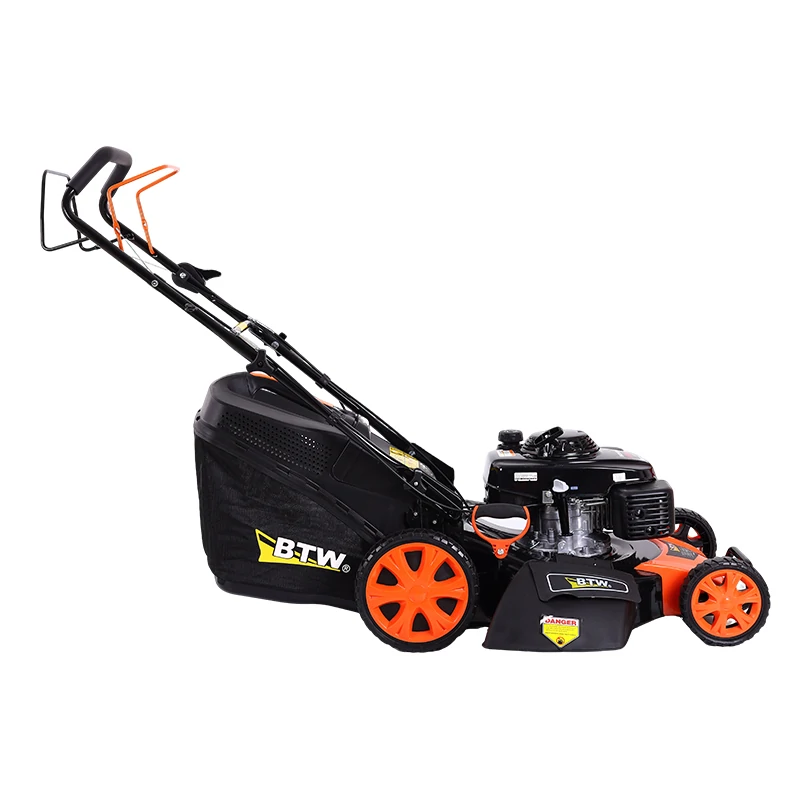
Choosing the right lawn mower engine size starts with the mowing application, not the engine number alone. For small residential lawns, a compact engine can provide enough power without adding unnecessary weight and fuel consumption. Larger properties, dense grass, slopes, wide cutting decks, and long operating hours require more power and torque. A commercial lawn mower also needs an engine matched to frequent operation and demanding cutting conditions. Engine displacement, torque, horsepower, deck width, transmission load, grass height, terrain, and mowing speed should therefore be evaluated together. For example, a narrow walk-behind mower used on a maintained residential lawn may work well with an engine around 140–190 cc. A larger riding mower may use several hundred cubic centimeters and much higher horsepower. Current manufacturer specifications show how widely engine sizing can vary. Briggs & Stratton lists walk-behind engines from 125 cc to 223 cc in one current range, while its riding mower engines extend from 344 cc to more than 800 cc.
1. What Does Lawn Mower Engine Size Actually Tell You?
Engine size usually refers to displacement, measured in cubic centimeters, or cc. It describes the total swept volume inside the engine cylinders.
A larger displacement can support greater torque and power, but displacement alone does not determine mower performance.
Engine design, operating speed, cooling, fuel system, valve configuration, blade design, deck width, and transmission requirements also affect the result.
This distinction matters when comparing different lawn mower models.
A 190 cc engine from one manufacturer does not automatically deliver identical working characteristics to another 190 cc engine.
Buyers should therefore compare the complete power specification rather than focusing only on cc.
CC, Horsepower, and Torque
Walk-behind mower engines are commonly described by displacement and torque.
Larger riding mower engines often use horsepower as a primary rating.
Briggs & Stratton currently explains that its smaller engines for walk-behind mowers use gross torque ratings, while larger engines often use horsepower.
Torque represents rotational force.
That matters because the engine needs to maintain blade rotation when the mower encounters thicker or taller grass.
Horsepower represents the rate at which the engine can perform work.
Both measurements provide useful information, but they describe different aspects of engine capability.
Why CC Alone Can Mislead Buyers
Consider two mowers with similar displacement.
One may use a wider deck and heavier blade system. The other may have a narrower cutting deck and lower overall machine weight.
The wider mower may place a greater demand on the engine.
A mower used on flat, regularly maintained grass also faces different conditions from one used on tall, wet, or dense grass.
Therefore, engine selection should begin with the complete machine configuration.
A useful purchasing question is:
“What workload must this engine handle?”
The answer is more valuable than simply asking which engine has the largest displacement.
2. How Much Engine Power Does a Residential Lawn Mower Need?
Residential lawn mowing usually involves shorter operating periods and relatively predictable conditions.
However, residential properties vary considerably.
A small suburban yard may contain level turf with regular mowing. A larger property may include slopes, rough areas, long grass, or multiple mowing zones.
The engine should match the actual workload.
For many walk-behind applications, engines in the roughly 140–200 cc range can cover common residential mowing requirements. Current Briggs & Stratton walk-mower examples include engines from 140 cc through 190 cc, with gross power ratings listed from 3.41 to 5.80 HP in its published range.
These figures should serve as reference points rather than universal sizing rules.
Small Residential Lawns
A small lawn with regular maintenance usually does not require a large engine.
A compact push mower may use a smaller displacement engine because:
- Cutting width remains moderate
- Grass height stays controlled
- Operating periods are relatively short
- Terrain is often manageable
- The machine carries less mechanical load
A smaller engine can also reduce machine weight.
That can make manual handling easier, especially when the mower needs frequent storage or transport.
Medium Residential Properties
Medium-size lawns may benefit from a self-propelled walk-behind mower or a larger cutting deck.
As deck width increases, the engine needs enough torque to maintain blade speed.
Thicker grass also increases the load on the blade.
A mower that works comfortably on short dry grass may struggle when the same lawn becomes tall or wet.
For this reason, buyers should leave some power margin.
The objective is not to purchase the largest available engine.
The objective is to avoid operating the engine continuously near its practical limit.
Large Residential Properties
Large properties can justify a riding mower.
The machine needs to power both the cutting system and the drive system.
Engine requirements therefore increase substantially.
Current riding mower engine ranges illustrate this difference. Briggs & Stratton lists several riding engine families from approximately 344 cc through 724 cc, with horsepower ranging from 10.5 to 27 HP across different product families.
This demonstrates why buyers should not compare a walk-behind mower and riding mower by engine size alone.
They perform different mechanical tasks.
3. How Should Engine Size Change for Commercial Lawn Mowing?
Commercial lawn mowing creates a different workload from typical residential use.
A contractor may operate the mower for several hours per day. The machine may travel across multiple properties and encounter different grass conditions.
The engine therefore needs to support sustained operation, frequent load changes, and the mechanical demands of the complete mower.
A commercial lawn mower should be evaluated as a system.
Engine size is important, but durability features, cooling, air filtration, lubrication, fuel capacity, service intervals, and transmission design also matter.
Commercial Walk-Behind Mowers
Commercial walk-behind machines often use engines in a similar displacement range to some residential models.
The difference may come from the engine design and mower construction.
A professional machine can place greater emphasis on:
- Long operating hours
- Heavy-duty components
- Service accessibility
- Air filtration
- Cooling
- Blade drive
- Transmission durability
The same engine displacement does not mean the same application capability.
Buyers should compare the complete specification.
Commercial Riding and Zero-Turn Mowers
Large commercial machines require substantially more power.
The engine may drive multiple systems, including the cutting deck, transmission, hydraulic components, and accessories.
Current commercial riding engine examples show how power increases with machine size. Briggs & Stratton’s CXi commercial series lists 20–27 gross HP and 656–810 cc displacement.
Its Commercial Turf Series also lists 22–27 gross HP for engines intended for zero-turn mower applications.
These specifications illustrate a key principle.
Commercial engine selection depends on both the cutting workload and the rest of the machine.
Match Engine Power to Deck Width
A wider cutting deck can cover more ground per pass.
That can improve productivity, but it also increases the cutting load.
A simplified relationship looks like this:
Wider deck → greater blade system demand → greater engine load
This does not mean that every wider deck needs the largest engine.
Manufacturers design the complete mower as a matched system.
The important purchasing principle is to avoid installing or specifying an engine without checking the mower’s deck, blade system, transmission, and mounting requirements.
4. How Do Grass Conditions and Terrain Affect Engine Size?
Engine selection changes when the mowing environment changes.
A mower working on short, dry turf faces a relatively predictable cutting load.
A mower working through tall, wet, dense grass experiences much greater resistance.
Terrain also changes the workload.
Grass Height
Tall grass increases resistance against the blade.
The engine must maintain blade speed while removing more material.
If the engine has limited torque, blade speed can fall.
That can affect cutting quality and increase the chance of bogging.
For properties that are not mowed frequently, a larger power margin can be useful.
Wet Grass
Wet grass can be particularly demanding.
Moisture adds weight to the grass and can make clippings stick to the deck.
The blade system may therefore require more torque.
A mower that performs well under dry conditions may need slower travel speed when cutting wet grass.
Engine size should reflect the actual working environment rather than ideal conditions.
Slopes and Uneven Terrain
Slopes introduce another factor.
A riding mower needs power for both cutting and movement.
The transmission and traction system also become important.
Engine size alone cannot determine slope capability.
The complete machine must provide suitable drive performance and stability.
Rough or Overgrown Areas
Rough areas can contain thicker vegetation, debris, and irregular terrain.
These conditions increase mechanical loads.
A commercial operator working across unmanaged properties may need a larger power reserve than a homeowner maintaining a regularly cut lawn.
The machine should also have suitable deck construction and debris protection.
5. How Do Different Lawn Mower Types Affect Engine Selection?
The mower format has a major effect on engine requirements.
A walk-behind mower transfers most of the machine’s movement effort to the operator or self-propel system.
A riding mower must move the operator and machine while powering the cutting deck.
A zero-turn mower can add hydraulic drive requirements.
These differences explain why engine sizing cannot rely on one universal chart.
Walk-Behind Mowers
Walk-behind machines usually use smaller vertical-shaft engines.
Current manufacturer examples show common walk-mower engines from roughly 125 cc to 223 cc.
For buyers evaluating walk behind lawn mowers, the main engine considerations include:
- Cutting width
- Grass density
- Self-propel requirement
- Terrain
- Operating frequency
- Collection or mulching system
- Expected service life
A push mower used on a small lawn has different requirements from a self-propelled commercial machine.
Riding Mowers
Riding mowers generally use larger engines because the engine must support more machine functions.
These can include propulsion, cutting, hydraulic systems, and accessories.
For larger residential properties and professional applications, a riding lawn mower can provide greater productivity than a walk-behind machine.
The engine should match the mower’s deck width and drive configuration.
Zero-Turn Mowers
Zero-turn machines often use higher-power engines because they combine wide cutting decks with hydraulic drive systems.
Commercial zero-turn equipment can operate for long periods under high loads.
The engine therefore needs sufficient power reserve.
Air filtration and cooling also become important because mowing generates substantial dust and grass debris.
Current commercial engine designs often include specialized debris-management and air-filtration systems for this reason.
Gasoline Lawn Mowers
For B2B buyers comparing fuel-powered equipment, gasoline lawn mower options remain relevant where longer operating periods and rapid refueling matter.
Engine sizing should consider fuel capacity as well as power.
A larger engine can provide greater power but may also consume more fuel under comparable operating conditions.
The correct balance depends on the intended workload.
6. What Engine Size Should B2B Buyers Choose?
There is no single engine size that suits every lawn mower.
Instead, buyers can use the following framework to narrow the specification.
| Application | Typical Mower Type | General Engine Range | Main Selection Factors |
|---|---|---|---|
| Small residential lawn | Push mower | ~125–160 cc | Light weight, moderate grass load |
| Medium residential lawn | Push or self-propelled | ~160–200 cc | Deck width, grass density, terrain |
| Large residential lawn | Riding mower | ~344–540+ cc | Deck, drive system, property size |
| Commercial walk-behind | Heavy-duty walk-behind | ~180–220+ cc | Operating hours, cutting load, durability |
| Commercial riding | Riding or zero-turn | ~500–810+ cc | Deck width, transmission, duty cycle |
| High-load commercial mowing | Large zero-turn | ~650–810+ cc or higher | Power demand, hydraulic system, workload |
These ranges provide a starting framework, not a replacement for the manufacturer’s complete mower specification.
Current engine catalogs show substantial variation within each application.
Step 1: Define the Mowing Area
Calculate the approximate lawn area that the machine will cover.
A larger area does not automatically require a larger engine.
It may instead indicate the need for a wider deck or riding configuration.
Step 2: Define Grass Conditions
Consider the grass species, cutting frequency, moisture, and typical height.
A regularly maintained lawn may require less power than an intermittently maintained field.
Step 3: Define Terrain
Flat terrain and slopes create different drive requirements.
For riding equipment, consider both engine power and transmission performance.
Step 4: Define Operating Hours
Residential users may operate the mower for a limited period each week.
Commercial operators may run the same equipment for several hours each day.
Longer duty cycles make cooling, lubrication, filtration, and service access more important.
Step 5: Define Deck Width
Deck width affects productivity and blade load.
The engine should match the manufacturer’s specified deck range.
Step 6: Check the Complete Engine Specification
Do not compare cc alone.
Check:
- Gross horsepower or torque
- Rated RPM
- Displacement
- Cylinder configuration
- Fuel system
- Cooling system
- Lubrication system
- Air filtration
- Shaft dimensions
- Mounting pattern
- Exhaust configuration
These specifications determine whether the engine actually fits the mower application.
7. Why Is Oversizing the Engine Not Always the Best Choice?
A larger engine can provide additional power, but more power does not automatically improve the economics of a mower.
Engine size can affect machine weight, fuel use, packaging space, cost, and balance.
A mower designed around a smaller engine may not accept a larger engine without structural or mechanical changes.
This issue becomes particularly important for manufacturers and distributors sourcing engines separately.
Physical Compatibility
An engine must fit the mower frame.
Buyers should verify:
- Mounting bolt pattern
- Crankshaft diameter
- Crankshaft length
- Shaft orientation
- Exhaust position
- Fuel connections
- Throttle connections
- Electrical system
- Starter configuration
Briggs & Stratton specifically advises buyers seeking replacement engines to verify mounting dimensions, exhaust location, and available clearance.
A higher-power engine with incompatible dimensions may require costly modifications.
Powertrain Compatibility
The blade system and transmission also need to match the engine.
An engine upgrade can change the load placed on belts, pulleys, clutches, transmissions, and hydraulic components.
The mower manufacturer should therefore confirm compatibility before changing engine specifications.
Fuel and Operating Cost
Larger engines can consume more fuel.
The actual difference depends on engine design, load, operating speed, and duty cycle.
For commercial fleets, fuel consumption can become a significant operating-cost variable.
The correct engine should provide enough power without creating unnecessary capacity.
8. How Can Manufacturers and Distributors Specify Lawn Mower Engines?
B2B buyers often purchase engines as part of an OEM mower program.
In this situation, engine selection needs to move beyond retail product descriptions.
A manufacturer should define the complete application.
Recommended Engine Specification Sheet
A useful specification sheet can include:
- Target mower type
- Cutting deck width
- Target displacement
- Required torque or horsepower
- Rated RPM
- Shaft specification
- Mounting dimensions
- Fuel type
- Starting system
- Cooling configuration
- Air filtration requirement
- Exhaust location
- Expected duty cycle
- Operating environment
- Target production quantity
This information allows an engine supplier to determine technical compatibility.
Prototype Testing
Prototype testing should evaluate the engine under real mower loads.
Testing can include:
- Blade engagement
- Thick grass cutting
- Wet grass cutting
- Self-propel operation
- Slope operation
- Extended runtime
- Hot-weather operation
- Restart performance
The goal is to identify whether the engine maintains suitable operating characteristics throughout the application.
Production Planning
Once the engine is validated, the manufacturer should define the approved engine configuration.
This prevents substitutions that alter shaft dimensions, mounting, exhaust routing, or electrical connections.
For large-volume OEM projects, consistent engine specifications also simplify parts planning and service support.
FAQ: Choosing Lawn Mower Engine Size
What engine size is suitable for a residential lawn mower?
Many residential walk-behind mowers use engines around 125–200 cc, depending on deck width and grass conditions. Larger properties may require riding equipment with substantially larger engines.
Is a bigger lawn mower engine always better?
No. The engine should match the mower’s cutting system, deck, transmission, terrain, and workload. An oversized engine can add cost, weight, and fuel consumption.
What size engine does a commercial lawn mower need?
Commercial machines vary widely. Heavy-duty walk-behind mowers can use relatively compact engines, while large riding and zero-turn mowers can use engines above 20 HP. Current commercial engine examples reach 27 gross HP and 810 cc.
Is cc more important than horsepower?
Neither measurement should be considered alone. CC describes displacement, while horsepower and torque describe power characteristics. Buyers should compare the complete engine specification.
What is the difference between torque and horsepower on a lawn mower engine?
Torque describes rotational force. Horsepower describes the rate of doing work. Walk-behind mower engines are often rated by torque, while larger riding mower engines commonly use horsepower ratings.
Does deck width affect engine size?
Yes. A wider deck generally creates a greater cutting load because the blade system handles more grass per pass. The engine should match the deck size specified by the mower manufacturer.
Does tall grass require a larger engine?
Tall grass can increase cutting resistance. If the mower frequently handles tall or dense grass, additional torque capacity can help maintain blade speed.
Does wet grass affect engine requirements?
Yes. Wet grass can increase cutting resistance and cause clippings to accumulate under the deck. Operators may need slower travel speeds and suitable engine torque.
What engine size is common for a riding lawn mower?
Riding mower engines vary substantially. Current examples range from around 344 cc to more than 800 cc, depending on the mower category and power requirement.
What should I check when replacing a lawn mower engine?
Check displacement, power rating, crankshaft dimensions, mounting pattern, shaft length, exhaust location, fuel system, electrical connections, and available clearance. Physical compatibility matters as much as power.
Can a higher-horsepower engine replace a lower-horsepower engine?
Not automatically. The mower’s mounting structure, blade system, transmission, cooling system, and other components must support the replacement engine.
What engine size is best for commercial lawn mowing?
The correct size depends on mower type, deck width, grass conditions, terrain, operating hours, and drive system. A commercial application usually needs a greater focus on duty cycle and serviceability than a typical residential application.
Conclusion
Choosing lawn mower engine size requires more than comparing cubic centimeters or horsepower. Buyers should start with the mowing application and then evaluate deck width, grass conditions, terrain, machine type, operating hours, and drivetrain requirements. A compact residential mower may work effectively with a smaller engine, while a commercial zero-turn mower can require substantially greater horsepower and displacement. Current engine ranges demonstrate this wide application spread.
For manufacturers and distributors, engine compatibility also matters. Shaft dimensions, mounting points, exhaust location, fuel system, electrical configuration, cooling, and blade or transmission requirements should all match the mower design. A larger engine does not automatically create a better mower if the rest of the machine cannot use its power effectively.
Xinghu supplies garden machinery and lawn mower solutions for different residential and commercial applications. The company works with equipment requirements such as mower configuration, engine power, cutting capacity, and operating conditions. For distributors, manufacturers, and professional landscaping equipment businesses, Xinghu can support product selection around the technical requirements of the intended lawn mower application.
References
- Briggs & Stratton, “What is My Engine Power Rating?”
https://www.briggsandstratton.com/en-us/support/faqs/engine-horsepower-or-torque-value - Briggs & Stratton, “What is the power measurement for my walk/push mower engine?”
https://www.briggsandstratton.com/en-us/support/faqs/mower-power-measurement - Briggs & Stratton, “CXi Series Engines.”
https://www.briggsandstratton.com/en-us/products/riding-mower-engines-cxi-series-engines - Briggs & Stratton, “EX Series Engines.”
https://www.briggsandstratton.com/en-us/products/riding-mower-engines-ex-series-engines - Briggs & Stratton, “How do I find my direct engine replacement specifications?”
https://www.briggsandstratton.com/en-us/support/faqs/direct-replacement-engine