

Lawn Mower Maintenance for Distributors: How Can Better Maintenance Support Long-Term Product Sales?
September 30, 2026
For lawn mower distributors, maintenance should be treated as part of product management rather than a post-sale service task. A clear maintenance program can reduce avoidable failures, support warranty handling, improve customer satisfaction, and create more predictable demand for spare parts. The right approach starts before the machine reaches the end user. Distributors should understand the maintenance requirements of each model, prepare service information, stock common replacement parts, and help customers follow the manufacturer’s maintenance schedule.
A residential customer may only use a mower for a few hours each month. A landscaping contractor can run the same type of machine for several hours each day. These operating patterns create very different maintenance requirements. A commercial lawn mower therefore needs a service strategy that accounts for operating hours, cutting conditions, engine configuration, deck design, and workload.
The same principle applies to inventory planning. A distributor selling a lawn mower for sale should not treat the machine as a single transaction. Filters, blades, belts, cables, spark plugs, wheels, and other service components can influence the customer’s long-term experience. Keeping the right parts available can also shorten repair cycles.
Maintenance knowledge becomes even more important when a distributor handles several mower configurations. Self-propelled machines, push models, riding units, and different engine sizes can require different service procedures. Understanding these differences helps sales teams set realistic expectations and helps service teams diagnose problems more efficiently.
Why Does Lawn Mower Maintenance Matter to Distributors?
Maintenance directly affects how a machine performs after delivery. For distributors, that creates a connection between product quality, after-sales support, spare parts, and repeat business.
A mower that receives appropriate routine service can operate more consistently. Poor maintenance can lead to starting problems, uneven cutting, excessive vibration, clogged decks, premature component wear, and avoidable downtime.
CPSC guidance also emphasizes the importance of following the owner’s manual and performing maintenance according to manufacturer instructions. Safety devices should remain in place and function correctly before operation.
Maintenance Influences the Customer Experience
Customers often evaluate a machine through daily operation rather than its technical specification sheet. If a mower starts reliably and cuts consistently, the customer may consider the purchase successful.
Problems can change that perception quickly.
For a homeowner, a starting issue may delay weekend residential lawn mowing. For a contractor, repeated downtime can affect several customer sites in one working day.
Distributors can reduce these problems by providing practical maintenance information at the point of sale. The information should explain service intervals, inspection points, consumables, storage procedures, and safety precautions.
Maintenance Also Affects Spare Parts Demand
Service parts create a different sales cycle from complete machines. A distributor may sell a mower once but supply blades, filters, belts, cables, or other components several times.
This makes spare parts planning an important part of product management.
Common maintenance parts should remain available for models with active customer demand. Less common components can follow a different stocking strategy based on failure rates and lead times.
The goal is not to stock every component in large quantities. Instead, distributors should identify parts that have predictable replacement demand or can stop a machine from operating when unavailable.
Different Customers Create Different Maintenance Loads
Residential users often operate machines intermittently. Commercial users may accumulate operating hours much faster.
A contractor may inspect the mower before every working day. A homeowner may inspect it only when a problem appears. Distributor support should account for this difference.
The maintenance schedule should therefore communicate both time-based and usage-based service intervals where the manufacturer specifies them.
What Maintenance Tasks Should Distributors Explain to Customers?
A useful maintenance program separates routine inspections from periodic service. Customers should understand which checks they can perform themselves and which procedures require qualified service personnel.
The exact schedule depends on the mower and engine manufacturer. Distributors should always use the model-specific manual as the primary reference.
Engine Oil and Lubrication
Engine oil protects internal components and supports proper engine operation. Oil condition can change with operating hours, temperature, contamination, and storage conditions.
Briggs & Stratton recommends oil changes according to the engine’s maintenance schedule and provides different intervals for different engine designs. Its current guidance notes that some engines require oil changes after specified operating hours or at the beginning of the lawn care season.
Distributors should avoid publishing one universal oil-change interval for every mower. The correct specification depends on the engine.
Service documentation should identify:
- Recommended oil grade
- Oil capacity
- Initial service interval
- Subsequent service interval
- Oil inspection procedure
- Drain and refill procedure
- Environmental disposal requirements
Clear documentation reduces incorrect servicing and helps customers avoid using unsuitable lubricants.
Air Filter Inspection
The air filter protects the engine from dust and debris. A restricted filter can reduce airflow and affect engine operation.
Mowing environments can expose filters to grass particles, soil, pollen, and other debris. Dry and dusty conditions can increase contamination.
Briggs & Stratton identifies air-filter service as a basic part of mower tune-up procedures.
The replacement interval should follow the engine manufacturer’s instructions. Some filter types can be cleaned, while others require replacement.
For distributors, stocking the correct filter type by model is more useful than simply keeping a large quantity of generic filters.
Spark Plug Service
Gasoline-powered mowers depend on the ignition system for reliable starting and engine operation. Spark plugs can accumulate deposits or wear over time.
Briggs & Stratton recommends checking spark plugs during maintenance and replacing them when they fail inspection. The correct plug type and gap setting depend on the engine.
A distributor should therefore link spark-plug recommendations to specific engine models.
Providing the wrong plug can create starting problems or incorrect ignition performance. Product documentation should include the manufacturer’s specified part number where appropriate.
Blade Inspection and Sharpening
The cutting blade directly affects mowing quality. A dull or damaged blade can produce uneven results and place additional load on the mower.
Blade maintenance also involves safety considerations. CPSC advises disconnecting the spark plug wire on gasoline-powered equipment before working around moving parts.
Distributors should communicate that blade service requires the mower to be shut down and secured according to the manufacturer’s instructions.
Replacement blades should match the machine’s deck, mounting pattern, dimensions, and application. A visually similar blade may not be an appropriate replacement.
Deck Cleaning
Grass buildup under the deck can interfere with cutting and discharge. Wet grass can create particularly difficult buildup.
CPSC warns that wet clippings can clog the discharge chute and potentially jam the rotary blade. The blade must stop completely before an operator clears a blockage.
Cleaning procedures should follow the manufacturer’s instructions. Some equipment allows specific washing methods, while other configurations require manual cleaning.
Distributors should avoid recommending a single cleaning procedure for every model.
How Should Distributors Build a Preventive Maintenance Schedule?
A preventive maintenance schedule gives distributors a structured way to communicate service requirements. It also helps customers distinguish daily checks from periodic maintenance.
A practical schedule can use three levels: before operation, periodic service, and seasonal or long-term storage.
Before Each Use
Pre-operation checks should focus on visible conditions and safety-related components.
The operator can inspect:
- Blade condition
- Wheels and tires
- Guards and shields
- Controls
- Fasteners
- Fuel or battery condition
- Oil level where applicable
- Visible leaks
- Grass or debris around the deck
- Safety features
CPSC recommends checking the work area for stones, sticks, wire, glass, and other objects before mowing. Such objects can damage equipment or become projectiles.
These checks take little time but can identify problems before the mower enters service.
Periodic Maintenance
Periodic maintenance should follow operating hours or the manufacturer’s specified intervals.
For a distributor, the maintenance table can be incorporated into the owner’s documentation or service portal.
Table: Distributor Maintenance Framework
| Maintenance area | Typical check | Service trigger |
|---|---|---|
| Engine oil | Level and condition | Manufacturer schedule |
| Air filter | Cleanliness and damage | Operating hours or condition |
| Spark plug | Wear, deposits, and gap | Manufacturer schedule |
| Blade | Sharpness and damage | Condition or operating hours |
| Deck | Grass buildup and damage | Regular inspection |
| Drive system | Belt, cable, or transmission condition | Manufacturer schedule |
| Wheels | Wear and fastener condition | Regular inspection |
| Safety controls | Function and physical condition | Before operation |
| Fuel system | Fuel condition and leaks | Regular inspection |
| Battery system | Charge, terminals, and condition | Model-specific schedule |
These intervals should not replace the machine’s service manual. They provide a framework for distributor communication.
Seasonal Storage
Storage becomes particularly important in regions with seasonal mowing cycles.
Before long-term storage, customers may need to clean the mower, service the engine, address fuel requirements, protect components from corrosion, and store the machine in an appropriate environment.
Fuel management deserves particular attention for gasoline-powered equipment. Briggs & Stratton notes that gasoline can deteriorate after extended storage and recommends appropriate fuel treatment practices.
Battery-powered models require different storage procedures. The battery type, charging system, storage temperature, and manufacturer’s instructions determine the correct approach.
Distributors should therefore provide separate storage instructions for each powertrain category.
How Do Different Lawn Mower Types Affect Maintenance?
Maintenance requirements change with machine architecture. Distributors should avoid using one generic maintenance sheet across an entire product range.
Engine configuration, drive system, deck design, and operator controls can all change the service procedure.
Push and Self-Propelled Models
A standard push mower has a relatively straightforward mechanical structure. The operator supplies the forward movement, while the engine or motor powers the cutting system.
A self-propelled model adds a drive system. That system can include transmission components, drive cables, belts, gears, or other mechanisms.
For example, a self propelled push lawn mower requires attention to both cutting and propulsion systems.
Drive engagement should operate correctly without excessive noise, slipping, or unusual vibration. The exact inspection procedure depends on the model.
Self-Mowing and Automated Features
Some mower configurations introduce additional mechanical or control features.
A self mowing lawn mower may require different maintenance considerations from a conventional push configuration.
The distributor should identify the components that distinguish the model. These may include drive mechanisms, control systems, sensors, or other specialized components.
Service documentation should make those differences clear. Customers should not need to interpret a generic maintenance guide to determine which components apply to their mower.
Engine Displacement and Workload
Engine size can influence maintenance demand because larger engines may support different workloads and operating patterns.
A 173cc lawn mower represents a specific engine configuration rather than a universal performance category.
Distributors should connect engine specifications with the intended application. The same engine can operate under very different maintenance conditions depending on cutting frequency, grass density, terrain, and operator practices.
Riding Mowers
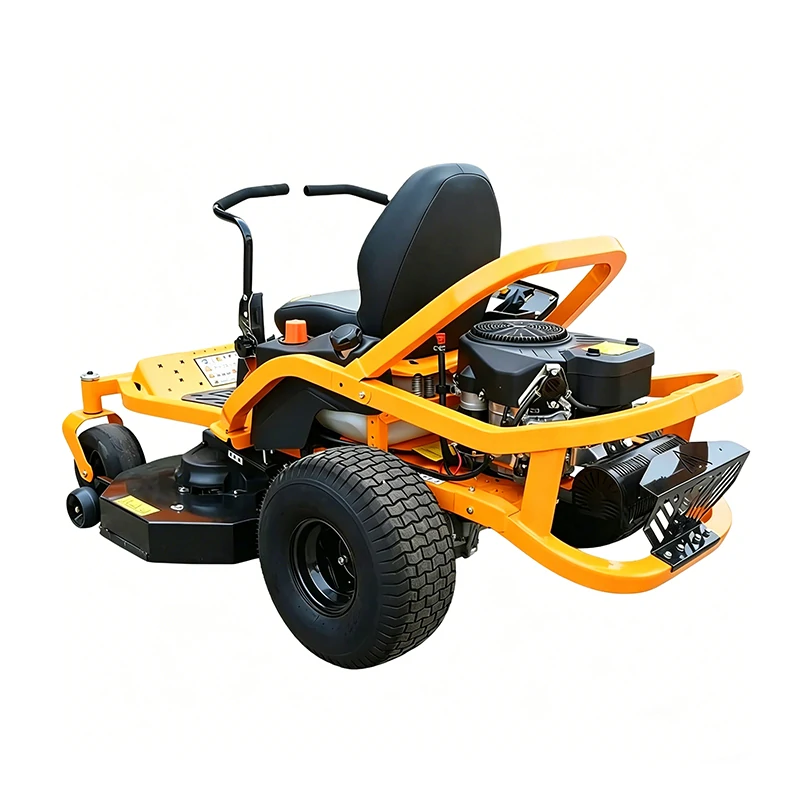
Riding machines introduce additional service points because they combine a larger chassis with a drive system and operator platform.
Maintenance can involve engine systems, transmission components, steering, tires, deck mechanisms, belts, electrical systems, and safety interlocks.
CPSC highlights blade contact and mower stability as important riding-mower safety considerations.
Service teams should therefore inspect both cutting components and machine controls during scheduled maintenance.
How Can Distributors Improve Spare Parts and After-Sales Support?
A strong maintenance program needs more than instructions. Customers also need access to the parts required to carry out those instructions.
Distributors can improve service efficiency by mapping maintenance parts to specific models and engine configurations.
Create a Model-to-Part Reference
A model-to-part matrix can connect each mower with its commonly serviced components.
Useful fields include:
| Information | Purpose |
|---|---|
| Mower model | Identifies the machine |
| Engine model | Confirms engine-specific parts |
| Blade specification | Prevents incorrect blade supply |
| Air filter number | Supports routine service |
| Spark plug number | Matches ignition requirements |
| Belt or cable number | Supports drive-system maintenance |
| Wheel specification | Simplifies replacement |
| Service interval | Helps schedule maintenance |
| Technical manual | Provides model-specific procedures |
This system reduces the risk of supplying a visually similar but incompatible component.
Stock High-Use Components
Not every spare part needs the same inventory level.
Fast-moving maintenance parts should receive higher stocking priority. Low-frequency components can use lower inventory levels when supplier lead times remain manageable.
The right mix depends on sales volume, customer type, failure history, seasonality, and regional conditions.
Seasonal demand can also change inventory requirements. Mowing equipment may experience higher service demand before and during the primary mowing season.
Support Warranty Diagnosis
Maintenance records can also help distributors investigate warranty claims.
A clear service history can show whether the machine received required maintenance. It can also help distinguish component failure from incorrect operation or insufficient servicing.
The process should remain factual. Distributors should inspect the machine, record the symptoms, identify affected components, and follow the manufacturer’s warranty procedure.
CPSC recommends that manufacturers and importers maintain appropriate compliance and testing practices for covered consumer products. For U.S. markets, covered walk-behind power mowers fall under 16 CFR Part 1205.
Warranty support should therefore connect technical service records with the relevant product documentation.
What Should Distributors Include in a Lawn Mower Maintenance Program?
A distributor maintenance program should give customers enough information to operate and service the machine correctly without turning the owner’s manual into an unreadable technical document.
The program can contain four practical elements.
1. Model-Specific Maintenance Guides
Each mower should have documentation that matches its actual configuration.
Avoid combining unrelated models into one maintenance schedule unless their service requirements are genuinely identical.
Engine oil, filter type, spark plug specification, blade design, and drive components can differ between models.
2. Pre-Delivery Inspection
A pre-delivery inspection gives the distributor an opportunity to identify obvious problems before the machine reaches the customer.
The inspection can cover:
- Assembly
- Fasteners
- Controls
- Blade installation
- Oil level
- Fuel system where applicable
- Battery condition
- Wheel alignment
- Safety features
- Packaging damage
The exact checklist should follow the manufacturer’s procedures.
3. Customer Service Training
Technical sales teams should understand basic maintenance requirements. They do not need to become mechanics, but they should know which questions to ask.
For example, when a customer reports poor cutting performance, the first questions may concern blade condition, cutting height, grass conditions, deck buildup, and operating method.
A starting problem may require different questions about fuel, battery condition, spark plug condition, air filtration, or engine controls.
Structured troubleshooting helps service teams avoid replacing parts without identifying the underlying issue.
4. Seasonal Communication
Maintenance information can be tied to the mowing calendar.
Before the season, customers can receive reminders about inspection and tune-up requirements. During the season, service reminders can focus on operating-hour intervals. Before storage, distributors can provide shutdown and storage guidance.
This approach keeps maintenance communication relevant instead of sending the same generic message throughout the year.
FAQ
How often should a lawn mower receive maintenance?
The correct interval depends on the mower and engine manufacturer. Maintenance may follow operating hours, calendar periods, or both.
What is the most important maintenance task for a commercial lawn mower?
There is no single task that applies to every model. Oil service, air filtration, blade condition, deck cleaning, drive-system inspection, and safety checks all matter.
Should distributors stock mower spare parts?
Yes, if the product range has recurring service demand. High-use items such as blades, filters, spark plugs, belts, and other model-specific components can support faster after-sales service.
How should distributors maintain a lawn mower for sale before delivery?
The distributor should follow the manufacturer’s pre-delivery procedure. Typical checks include assembly, controls, blade installation, fluids, fasteners, safety features, and visible damage.
Does a self-propelled mower require more maintenance?
It can have additional maintenance points because it includes a propulsion system. Drive belts, cables, transmission components, or other mechanisms may require inspection.
How should gasoline-powered mowers be stored?
Follow the engine manufacturer’s storage instructions. Fuel condition, oil service, cleaning, battery disconnection where applicable, and storage conditions should all be considered.
How does maintenance differ between residential lawn mowing and commercial use?
Commercial equipment often accumulates operating hours faster. Contractors may therefore reach hour-based service intervals sooner than residential users.
Can distributors create one maintenance schedule for every mower?
A general inspection framework can work across a range. Specific service intervals and parts should remain model-specific.
Why should distributors provide maintenance documentation?
Clear documentation can reduce incorrect servicing, improve customer support, simplify warranty diagnosis, and help customers maintain equipment correctly.
What should buyers ask a lawn mower manufacturer about maintenance?
Buyers should request service intervals, maintenance manuals, spare parts lists, engine specifications, warranty procedures, recommended consumables, and technical support arrangements.
Conclusion
Lawn mower maintenance should form part of a distributor’s product strategy from the beginning. Routine inspection, scheduled service, spare parts planning, customer documentation, and warranty procedures all contribute to the long-term performance of the equipment.
The maintenance requirements also change with mower configuration. A basic push model, self-propelled machine, and riding unit can have different service points. Engine size and operating workload create further differences.
For distributors, the practical objective is to connect each mower model with the correct maintenance schedule and replacement parts. That structure can make after-sales support more predictable and help customers keep equipment in service.
Xinghu supplies lawn mower equipment for distributors and commercial customers, with product configurations covering different mowing requirements. The company supports B2B buyers with model information, technical specifications, and product supply for markets serving both commercial operators and residential lawn mowing applications.
References
- U.S. Consumer Product Safety Commission – Power Lawn Mowers
- U.S. Consumer Product Safety Commission – Power Lawn Mowers: Walk-Behind Requirements
- U.S. Consumer Product Safety Commission – Mowers and Applicable Standards
- U.S. Consumer Product Safety Commission – Walk-Behind Power Mower Fact Sheet
- U.S. Consumer Product Safety Commission – General Use Products: Certification and Testing
- Briggs & Stratton – How to Perform Lawn Mower Maintenance
- Briggs & Stratton – How to Tune Up Your Lawn Mower