.png)
.png)



2 Stroke Brush Cutter
-
High Power-to-Weight Ratio: Stripped of heavy valve trains and oil pumps to deliver maximum cutting horsepower in an ultra-lightweight frame.
-
Instantaneous RPM Acceleration: High-velocity two-stroke combustion delivers immediate throttle response to prevent trimming line binding.
-
360° Multi-Angle Operation: Continuous fuel-oil mist lubrication allows safe, uninterrupted cutting at vertical angles and overhead slopes.
-
Partner for Volume Scaling: Source rugged, high-RPM clearing equipment built to withstand continuous field abuse in remote agricultural zones. Message our export desk today for full freight quotes.
-
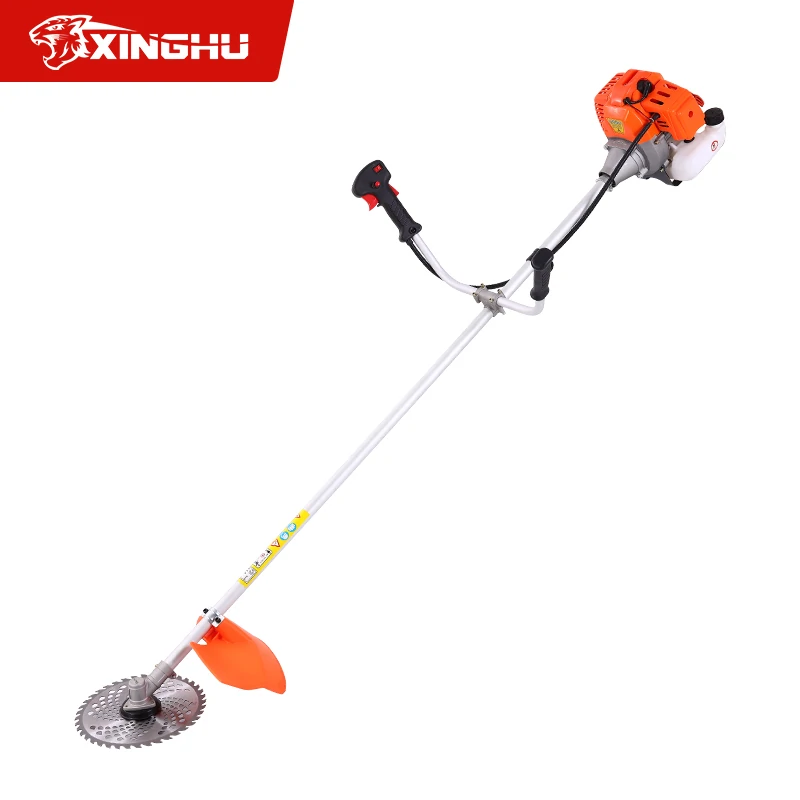
42cc Brush Cutter & Grass Trimmer | XH-CG430
When managing dense wild vegetation, stubborn thickets, and expansive commercial properties, equipment power-to-weight ratios are a primary factor in operator efficiency. Slower blade acceleration can cause cutting heads to bind in heavy brush, extending project timelines and increasing labor overheads.
The 2 stroke brush cutter remains the undisputed powerhouse of the high-output land reclamation sector, favored globally for its rapid throttle response, high operational RPM capabilities, and ultra-lightweight mechanical profile. As an essential category within modern lawn care equipment fleets, these high-velocity petrol cutters deliver an unmatched power-to-weight ratio that allows operators to slice through heavy field weeds rapidly.
For global sourcing managers, agricultural procurement networks, and industrial tool distributors, stocking a rugged, high-RPM two-stroke range ensures access to a highly dependable, cost-effective tool built to deliver uncompromising cutting performance in the harshest environments.
The Mechanical Principles of High-RPM Two-Stroke Power
The enduring dominance of a 2 stroke brush cutter in heavy-duty land clearing stems from its elegant, high-efficiency two-stroke internal combustion engine layout, designed to maximize raw power output per cubic centimeter.
A two-stroke engine completes a full power cycle across two movements of the piston—upward compression and downward power—combining the intake, transfer, and exhaust cycles simultaneously through specialized cylinder ports rather than mechanical valves:
-
Power on Every Turn: Unlike four-stroke engines that ignite once every two crankshaft rotations, a two-stroke engine fires a power stroke on every single revolution of the crankshaft, resulting in double the ignition frequency.
-
Pre-Mixed Fuel Lubrication: The engine uses a precise mixture of unleaded gasoline and specialized two-stroke oil. As this fuel vapor passes through the crankcase into the combustion chamber, the suspended oil particles coat the high-speed needle bearings, connecting rod, and cylinder walls instantly.
-
Rapid Throttle Response: Bypassing heavy mechanical valve trains, cams, and oil pumps minimizes internal rotating mass, allowing the engine to accelerate from idle to maximum cutting speeds of over 9,000 RPM almost instantly.
This stripped-down mechanical layout creates a lightweight power plant that delivers massive high-velocity blade speeds, making the commercial brush cutter incredibly effective at shattering thick brush stems through sheer kinetic impact.
Key Benefits of 2 Stroke Brush Cutters
Unmatched Power-to-Weight Ratio
Because two-stroke engines do not require heavy overhead camshafts, mechanical valves, timing chains, or oil sumps, their power plant weight is substantially lower than four-stroke alternatives. This minimal deadweight gives operators access to exceptional raw cutting horsepower without bearing a heavy physical load, drastically reducing body fatigue over long shifts.
Instantaneous Throttle Acceleration
When clearing dense field sections, blade speeds can drop rapidly as they strike thick brush. A two-stroke engine responds immediately to throttle inputs, revving up to peak RPMs instantly to clear tangles and prevent the trimmer head from binding or wrapping in long, fibrous weeds.
Absolute Multi-Angle Multi-Position Operation
Traditional four-stroke engines with standard oil sumps can experience oil starvation and engine seizure if tilted sideways or upside down for too long. Because a two-stroke engine is lubricated continuously by fuel-oil vapor suspended in the air stream, it can operate at any angle—including vertical edging and overhead branch trimming—without risking mechanical starvation.
Streamlined, Highly Durable Mechanical Design
Fewer moving parts means fewer components can fail under heavy field abuse. Two-stroke engines feature a highly resilient, simplified structural layout that withstands high thermal strain and intense operating vibrations, making them exceptionally reliable in remote regions far from advanced service centers.
Cost-Effective Fleet Scaling Metrics
The mechanical simplicity of the two-stroke platform results in lower manufacturing costs compared to complex multi-valve engines. For international procurement managers looking to scale large municipal or agricultural labor forces on a fixed budget, two-stroke cutters offer an incredibly cost-effective acquisition option.
Commercial Applications
Large-Scale Agricultural Clearing
Agricultural operations must constantly clear invasive weeds, dense brambles, and wild brush from field boundaries, drainage ditches, and livestock fence lines. The high rotational speed and aggressive cutting capabilities of a heavy-duty two-stroke machine allow farmhands to clear miles of field perimeters rapidly, keeping wild overgrowth from encroaching onto cash crops or short-circuiting electric fencing.
Industrial Land Reclamation
Construction teams and utility contractors frequently encounter completely overgrown, un-managed parcels of land packed with heavy brush, woody stalks, and small tree saplings. Armed with multi-tooth steel brush blades, high-displacement two-stroke cutters operate as handheld clearing saws, leveling thick ground cover rapidly to prepare sites for excavation or utility layout.
Comprehensive Commercial Landscaping
Professional landscape maintenance companies managing large properties, industrial parks, and corporate facility grounds require robust, high-speed tools that deliver fast project turnarounds. Two-stroke cutters can be ran continuously at high throttle levels throughout multi-hour shifts, easily transitioning from fine nylon line trimming around walls to heavy steel blade work in overgrown drainage swales.
Engine Displacement and Target Vegetation Metrics
Selecting the appropriate two-stroke displacement size is essential to balancing operator fatigue with the density of the target vegetation:
Engine Displacement Average Unit Weight Recommended Cutting Attachment Target Vegetation Matrix Intended Operational Sector 26 CC – 33 CC 5.0 kg – 5.8 kg Dual Nylon Line Head / 3-Tooth Blade Soft lawn grass, tall wild weeds, light clover patches. Commercial maintenance trim, residential networks. 43 CC Class 7.2 kg – 7.8 kg 3-Tooth Blade / 8-Tooth Steel Disk Thick overgrown weeds, dense continuous briars, heavy brush. Agricultural property clearing, commercial landscapers. 52 CC+ Industrial 8.0 kg – 8.5 kg 40-Tooth Carbide Tipped Circular Saw Woody brushwood, thick tangled vines, tree saplings up to 2". Industrial land reclamation, forestry firebreak management. Why Choose Us as Your Two Stroke Brush Cutter Factory
Advanced Cylinder Porting and Metallurgical Manufacturing
Our production facility utilizes high-precision die-casting technology to manufacture chrome-plated or Nikasil-coated engine cylinders. This advanced surface treatment provides excellent wear resistance and thermal dissipation, ensuring our lawn maintenance machines maintain optimal compression and high power output under intense workloads.
Flexible Global OEM Brand Customization
As a dedicated manufacturing partner, we provide comprehensive OEM and ODM support for volume container orders. We can modify engine displacements, optimize handle designs, adjust fuel tank sizes, customize color schemes, and supply private-label packaging to ensure your inventory stands out in your regional market.
Frequently Asked Questions
What happens if an operator runs a two-stroke brush cutter on pure gasoline?
Running a two-stroke engine on pure gasoline without mixing two-stroke oil will cause immediate engine failure. Without the suspended oil particles to lubricate the moving parts, intense friction will score the cylinder walls and seize the piston within minutes of operation.
How do I store a two-stroke brush cutter to prevent carburetor clumping?
For long-term storage exceeding 30 days, you should completely drain the fuel tank, then start the engine and let it idle until it runs out of fuel completely. This clears residual fuel from the carburetor jets, preventing varnish deposits from clogging the system.
Can a two-stroke brush cutter handle woody tree saplings?
Yes. When fitted with a high-quality 40-tooth or 80-tooth carbide-tipped circular saw blade, a high-displacement two-stroke cutter (43cc or larger) can easily cut through woody brushwood, thick brambles, and small tree saplings up to 2 inches in diameter.
Leave Your Message
-