

What Is a Self Propelled Lawn Mower and How Can Businesses Choose the Right Model?
July 31, 2026
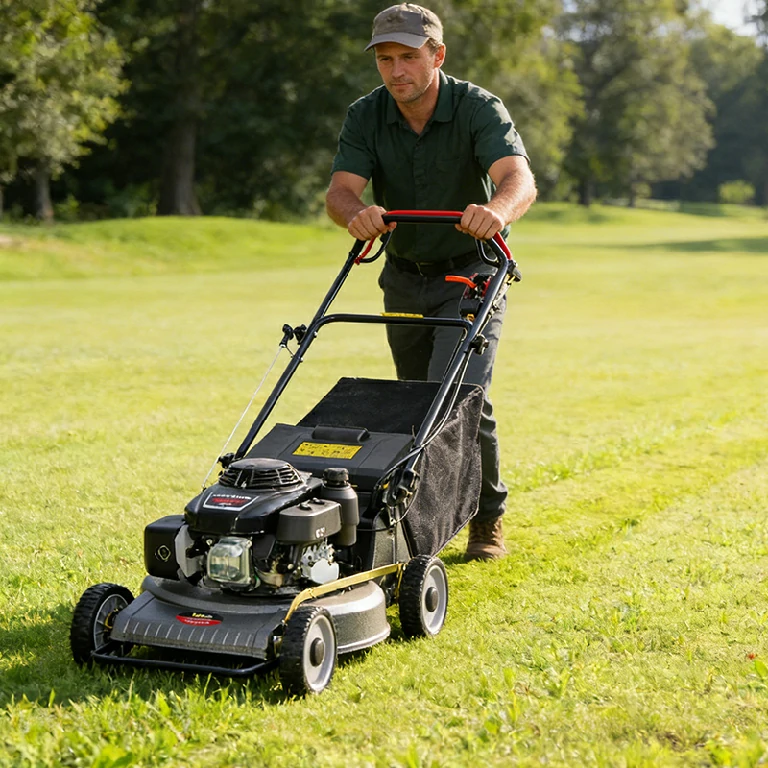
A self propelled lawn mower is a type of mower that uses its own drive system to move forward, reducing the physical effort required from the operator. Unlike traditional push mowers, which require the operator to manually push the entire machine, a self propelled model uses engine power or a motor-driven transmission to assist movement. For commercial landscaping companies, property maintenance teams, and outdoor service providers, this design can improve working efficiency and reduce operator fatigue during long mowing tasks.
Understanding what is a self propelled lawn mower helps professional buyers select equipment that matches their operational needs. For example, a landscaping company maintaining multiple residential properties may benefit from a self propelled mower because operators can complete more tasks with less physical effort. A large garden maintenance project with slopes or uneven terrain may also require a machine that provides consistent forward movement and better control.
Self propelled lawn mowers are available in different configurations, including gasoline-powered models, battery-powered models, and professional commercial versions. The right choice depends on factors such as lawn size, terrain conditions, working hours, maintenance requirements, and budget planning. Businesses should evaluate equipment performance instead of choosing a mower only based on purchase cost.
The commercial lawn care industry requires reliable equipment that supports daily operations. A suitable mower can improve productivity, reduce labor pressure, and help companies complete projects on schedule. Therefore, understanding the working principle and application of self propelled lawn mowers is an important step before purchasing outdoor power equipment.
How Does a Self Propelled Lawn Mower Work?
A self propelled lawn mower uses a drive mechanism that transfers power from the engine or motor to the wheels. This system allows the mower to move forward without requiring continuous pushing from the operator.
Understanding the Drive System
The main components of a self propelled lawn mower usually include:
| Component | Function |
|---|---|
| Engine or Motor | Provides power for mowing and movement |
| Transmission System | Transfers power to the wheels |
| Drive Control | Allows operators to control forward movement |
| Cutting Deck | Houses blades for grass cutting |
| Wheels | Support movement across different surfaces |
Caption: Main Components of a Self Propelled Lawn Mower
When the operator activates the drive control, the transmission system connects power to the wheels. The mower then moves forward at a controlled speed. This design allows operators to focus more on steering and cutting direction.
Different models use different drive systems. Some machines use front-wheel drive, rear-wheel drive, or all-wheel drive configurations. Each option provides different advantages depending on the working environment.
Front Wheel Drive, Rear Wheel Drive, and All Wheel Drive
Front-wheel-drive models are often suitable for flat lawns and simple landscaping tasks. They provide easy turning because the front wheels control movement.
Rear-wheel-drive models offer better traction on slopes and uneven surfaces. They are commonly selected for professional applications where terrain conditions are more challenging.
All-wheel-drive systems provide power to multiple wheels. This configuration can improve control when working on difficult surfaces.
For example, a landscaping contractor working in residential areas with different lawn layouts may prefer a rear-wheel-drive model. A company maintaining flat commercial spaces may select a front-wheel-drive machine for easier operation.
Why Do Commercial Users Choose Self Propelled Lawn Mowers?
Commercial buyers often choose self propelled lawn mowers because these machines improve working efficiency and reduce operator workload. For businesses managing regular mowing schedules, these benefits can directly influence productivity.
Reduce Operator Fatigue During Long Working Hours
Traditional push mowers require more physical effort, especially when working on larger areas or uneven terrain. Operators must continuously push the machine while controlling cutting direction.
A self propelled lawn mower reduces this physical demand by assisting forward movement. This feature becomes valuable when employees need to operate equipment for several hours each day.
For commercial applications, reduced fatigue can help maintain consistent performance throughout the working period. Operators can spend more energy on mowing quality, safety, and task completion.
Improve Productivity for Landscaping Operations
Time efficiency is important for professional landscaping companies. Businesses often need to complete multiple projects within limited schedules.
Self propelled systems help operators cover larger areas with less effort. This can support:
- Faster mowing operations
- More consistent working speed
- Reduced physical workload
- Improved operator comfort
For example, a property maintenance company responsible for apartment communities may need to maintain several lawns every week. A self propelled mower can help employees complete these tasks more efficiently compared with manual push equipment.
Suitable Applications for Different Business Types
Self propelled lawn mowers are used in various professional environments.
| Application | Why Self Propelled Mowers Are Suitable |
|---|---|
| Landscaping Companies | Support repeated daily mowing tasks |
| Property Management | Improve maintenance efficiency |
| Parks and Public Areas | Handle larger grass areas |
| Garden Service Providers | Reduce operator effort |
| Commercial Facilities | Maintain outdoor spaces regularly |
Caption: Common Commercial Applications of Self Propelled Lawn Mowers
Different businesses should select models according to their working conditions. A small landscaping company may need a compact machine with easy transportation. A larger contractor may require stronger performance for continuous operation.
What Factors Should Businesses Consider Before Buying a Self Propelled Lawn Mower?
Choosing a self propelled lawn mower requires careful evaluation of technical specifications and business requirements. A suitable model should match the company’s workload, terrain, and maintenance capability.
Evaluate Engine Type and Power Requirements
Engine performance directly affects mowing capability. Gasoline-powered models remain popular for commercial applications because they provide strong power output and longer operating periods.
For businesses requiring extended working time, a gas self propelled lawn mower can provide a practical solution. These models are commonly used where reliable power and continuous operation are important.
Battery-powered models may be suitable for smaller areas or businesses focusing on lower noise operation. However, buyers should consider battery capacity, charging time, and working duration.
The right power source depends on:
- Lawn size
- Grass thickness
- Terrain conditions
- Daily operating hours
- Maintenance resources
Consider Cutting Width and Working Efficiency
Cutting width determines how much grass the mower can cut in one pass. A wider cutting deck can improve productivity on large lawns, while a smaller deck provides better flexibility in narrow areas.
Buyers should balance cutting efficiency with transportation and storage requirements.
For example:
| Cutting Width | Suitable Application |
|---|---|
| Small Width | Residential gardens and narrow spaces |
| Medium Width | Professional landscaping services |
| Large Width | Commercial properties and large lawns |
Caption: Relationship Between Cutting Width and Application Requirements
A larger cutting width does not always mean better performance. Businesses should choose a size that fits their regular projects.
Contact Xinghu for professional lawn mower recommendations and equipment solutions.
How Can Businesses Select the Right Self Propelled Lawn Mower Model?
Commercial buyers should select a self propelled lawn mower based on actual working conditions rather than general specifications. Different businesses have different mowing requirements, and the ideal equipment depends on factors such as property size, terrain complexity, grass type, and operating frequency.
A landscaping company serving residential customers may need a lightweight model that allows easy transportation between locations. A commercial maintenance company managing large properties may require a more durable machine with stronger performance for continuous operation.
Match Machine Features With Working Conditions
Before purchasing, businesses should identify the main challenges they face during daily mowing tasks.
Important factors include:
| Working Condition | Recommended Consideration |
|---|---|
| Flat and open lawns | Focus on cutting efficiency and operating speed |
| Sloped areas | Consider stronger traction and wheel control |
| Thick or tall grass | Select suitable engine power and blade performance |
| Frequent daily operation | Prioritize durability and maintenance convenience |
| Small or narrow spaces | Choose flexible equipment with easier handling |
Caption: Matching Self Propelled Lawn Mower Features With Working Conditions
For example, a landscape service provider working in areas with uneven terrain may require a mower with strong wheel traction. A company maintaining office parks may focus more on speed and consistent cutting results.
The equipment should support the company’s workflow. A suitable mower helps operators complete tasks efficiently while maintaining stable cutting quality.
Consider Maintenance and Spare Parts Availability
Maintenance requirements directly influence the long-term cost of commercial equipment. A mower that is easy to maintain can reduce downtime and improve operational reliability.
Before purchasing, businesses should check:
- Availability of replacement parts
- Maintenance procedures
- Component durability
- Technical support
- Service response time
A professional lawn mower supplier should provide clear maintenance information. This allows customers to prepare operating plans and reduce unexpected interruptions.
For international buyers, spare parts availability is especially important. Equipment downtime may affect customer schedules and project completion.
How Should Buyers Compare Self Propelled Lawn Mower Suppliers?
Choosing the right equipment supplier is an important part of the purchasing process. A reliable supplier should understand commercial applications and provide suitable solutions based on customer requirements.
Review Supplier Experience and Product Knowledge
A professional supplier should provide detailed technical information rather than only product pricing. Buyers should evaluate whether the supplier understands lawn care operations and equipment applications.
Key evaluation points include:
- Product range
- Manufacturing capability
- Technical documentation
- Quality inspection process
- Customer support
A supplier with practical industry experience can help customers avoid unsuitable equipment choices.
For example, a company purchasing equipment for professional landscaping may need different specifications compared with a homeowner. A knowledgeable supplier should recommend models according to workload and application.
Compare Product Specifications Carefully
Different self propelled lawn mower models may have similar appearances but different performance characteristics.
Buyers should compare:
| Specification | Why It Matters |
|---|---|
| Engine Power | Determines mowing capability |
| Cutting Width | Influences working efficiency |
| Drive System | Affects control and terrain performance |
| Deck Material | Influences durability |
| Weight Design | Affects transportation and handling |
Caption: Important Specifications When Comparing Self Propelled Lawn Mowers
A balanced configuration is usually more valuable than selecting the highest specification available. The equipment should match the actual business requirements.
For example, a small landscaping company may not need the largest machine available. A medium-size model may provide better value because it meets operational needs while controlling investment costs.
Evaluate Product Flexibility and Application Range
Businesses often expand their services over time. Choosing equipment with broader application possibilities can support future growth.
Some companies may start with residential lawn maintenance and later add commercial properties. In this situation, selecting a versatile mower can provide greater flexibility.
For businesses requiring a professional walk-behind solution, a self propelled push lawn mower can be suitable for applications where maneuverability and operator control are important.
The right equipment choice depends on current needs and future operating plans.
FAQ About Self Propelled Lawn Mowers
What is a self propelled lawn mower?
A self propelled lawn mower is a mower equipped with a drive system that helps move the machine forward. The operator controls direction and cutting operation without needing to push the full weight of the mower manually.
What is the difference between a self propelled mower and a push mower?
A push mower requires the operator to provide all movement force. A self propelled mower uses a powered drive system to assist forward movement, which reduces physical effort and improves efficiency.
Are self propelled lawn mowers suitable for commercial use?
Yes. Self propelled lawn mowers are widely used by landscaping companies, property maintenance providers, and commercial service teams because they reduce operator fatigue and improve productivity.
Which type of self propelled lawn mower is best for uneven terrain?
Rear-wheel-drive and all-wheel-drive models are often more suitable for uneven terrain because they provide stronger traction and better control on slopes or challenging surfaces.
Are gas self propelled lawn mowers better than electric models?
The choice depends on application requirements. Gas models usually provide longer operation time and strong power output, while electric models may be suitable for smaller areas and businesses that prioritize lower noise operation.
How do I choose the right lawn mower supplier?
Businesses should evaluate supplier experience, product quality, technical support, spare parts availability, and understanding of commercial applications before making a decision.
About Xinghu
Xinghu focuses on providing lawn mower solutions for professional users, including landscaping companies, property maintenance teams, and commercial outdoor service providers. The company develops and supplies lawn mowing equipment designed for different working environments and operational requirements.
With experience in outdoor power equipment, Xinghu provides various mower solutions for customers who need reliable performance, practical design, and suitable configurations. The company supports customers with equipment selection, technical information, and application guidance.
For businesses looking for a dependable lawn mower supplier, Xinghu works to provide equipment options that balance productivity, maintenance requirements, and long-term operating value. By understanding customer applications and market needs, Xinghu helps professional users select suitable lawn care equipment for their projects.
References
- Lawn information and maintenance overview:
https://en.wikipedia.org/wiki/Lawn - Outdoor power equipment safety information:
https://www.osha.gov/lawn-care - Agricultural and machinery information:
https://www.britannica.com/technology/agricultural-machinery