





Small Gasoline Chainsaw
-
High Power-to-Weight Balance: Engineered with ultra-lightweight magnesium alloy crankcases to reduce operator arm strain during extended overhead pruning.
-
Rapid Inertia Chain Braking: Equipped with a dual-pivot mechanical safety brake that halts chain rotation instantly in the event of a structural kickback.
-
Toolless Fuel Access Caps: Designed with integrated flip-up tank caps to streamline field refueling and chain oil oil-replenishment without auxiliary tools.
-
Wholesale Bulk Procurement: Expand your commercial distribution lines or retail inventory with nimble, high-RPM pruning saws. Contact us for the latest quote.
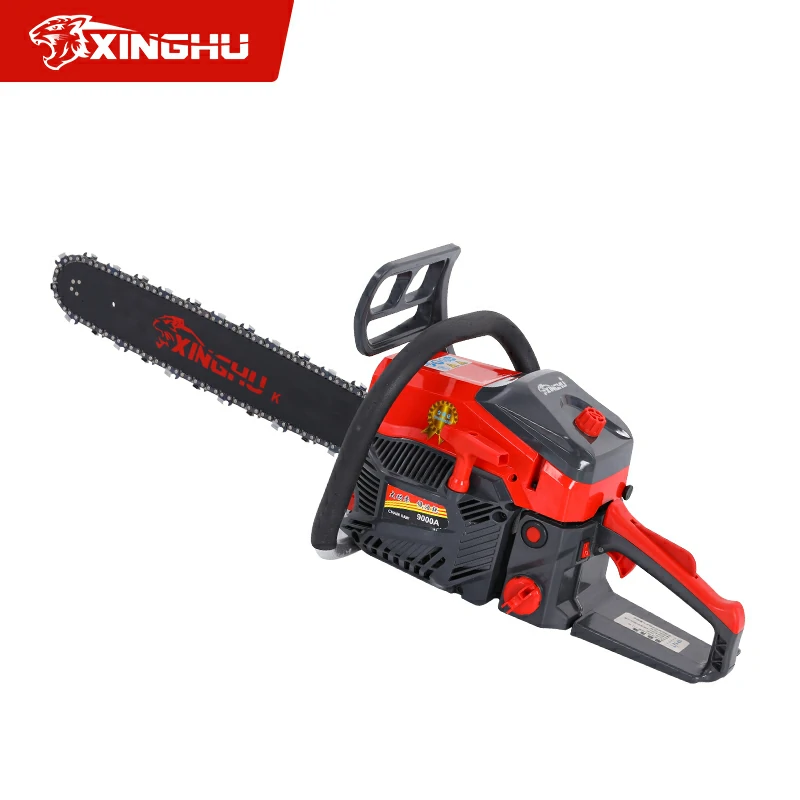
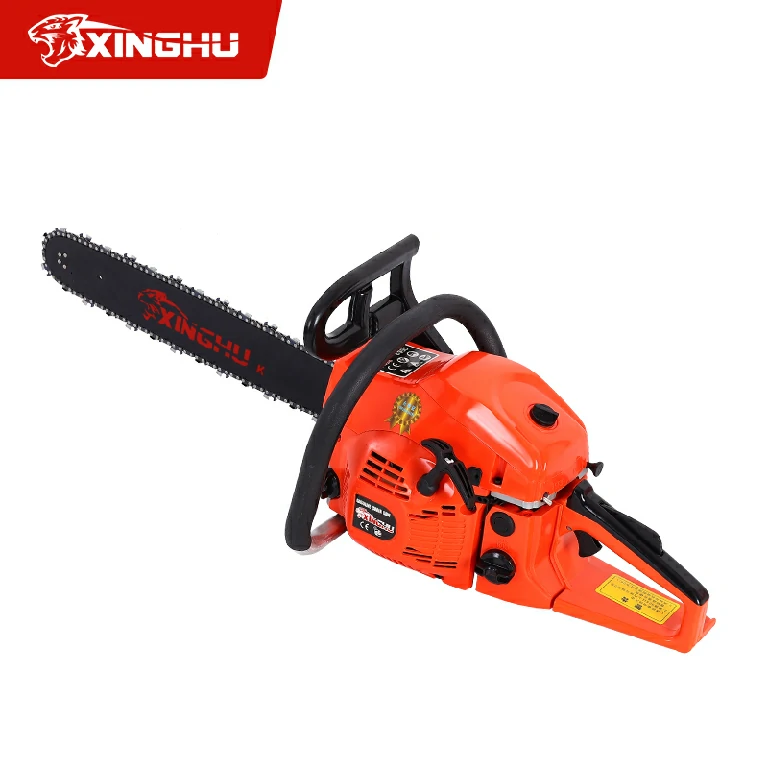
Small gasoline chainsaw is a portable, hand-held mechanical saw. Specifically, engineers define this category by an engine displacement typically ranging from 25cc to 38cc. Furthermore, they configure these units to drive a loop-chain cutter around a compact guide bar width of 10 to 14 inches. Unlike bulky forestry logging saws, a small petrol unit is structurally optimized for top-handle operation, maximizing multi-angle directional control.
The tool relies on a high-velocity two-stroke internal combustion engine paired with a centrifugal clutch assembly to execute cuts:
-
Centrifugal Clutch Dynamics: At engine idle speeds, the internal clutch springs hold the shoe lining away from the outer drum. However, when the operator squeezes the throttle, centrifugal force overcomes the spring tension. It throws the shoes outward to engage the drum instantly.
-
Automatic Bar Lubrication: An integrated mechanical oil pump draws bar-and-chain lubricant from a dedicated reservoir continuously. Consequently, it forces the oil through an alignment port into the guide bar groove, reducing friction along the high-speed chain chassis.
-
Kickback Prevention Systems: The machine integrates an inertial front handguard linked directly to a heavy-duty steel band brake that wraps around the clutch drum. If the bar tip strikes a hard knot, the operator's wrist hits the guard, freezing chain movement in milliseconds.
Therefore, this compact engineering makes the unit a premium asset within the broader garden chainsaw classification. Because the overall engine block mass is minimized, the power plant achieves exceptional throttle responsiveness. As a result, it accelerates to high cutting RPMs almost instantly to execute clean, splinter-free wood shears.
Small Gas Chainsaw Commercial Applications
Orchard and Vineyard Canopy Pruning
Commercial fruit growers and vineyard operators must execute meticulous annual canopy pruning to ensure optimal sunlight penetration and high fruit yields. Small gasoline chainsaws allow orchard hands to weave easily between tightly structured fruit tree rows, cleanly slicing out dead limbs, water sprouts, and thick suckers close to the main trunk without nicking or scaring neighboring productive branches.
Professional Tree Service Arboriculture
Arborists climbing deep into urban tree canopies utilize specialized top-handle versions of small petrol saws to execute high-altitude limb removal and crown reduction. Suspended by safety ropes and climbing harnesses, these operators require a lightweight tool that can be maneuvered with one hand while configuring lines, ensuring absolute cutting control over volatile dangling limbs.
Utility Line Clearing and Right-of-Way Maintenance
Power companies and municipal public works departments must maintain clear safety margins around high-voltage overhead lines and communication cables. Maintenance crews utilize compact saws to trim encroaching branches back from utility paths rapidly, preventing storm-related line failures and structural fires in high-wind rural areas.
Emergency Storm and Roadway Reclamation
Following severe weather events, tornadoes, or high-wind blizzards, public roads frequently become blocked by fallen branches and split tree limbs. Emergency response crews deploy small, fast-starting gasoline saws to rapidly delimb fallen trees, cutting away tangled debris so heavy earthmoving equipment and emergency vehicles can navigate roadways safely.
Guide Bar Length and Cutting Selection Matrix
Selecting the appropriate guide bar length requires matching the structural diameter of the target timber with the torque limitations of the small engine displacement:
| Guide Bar Length | Optimal Log Diameter | Recommended Wood Profile | Engine Displacement Target | Operational Weight Index |
| 10 Inch (25 cm) | Under 6 Inches | Delicate fruit tree branches, thin saplings, softwood pruning. | 25 CC – 28 CC Top-Handle | Ultra-Lightweight (Under 3.5 kg dry) |
| 12 Inch (30 cm) | 6 to 9 Inches | Standard orchard pruning, landscape tree delimbing, fence posts. | 28 CC – 32 CC Compact Class | Low Handling Resistance (Approx. 4.0 kg) |
| 14 Inch (35 cm) | 9 to 12 Inches | Thick storm debris, firewood processing, utility right-of-way clearing. | 35 CC – 38 CC Rear-Handle | Balanced Power Profile (Approx. 4.5 kg) |
Engine Technical Configurations and Fuel Management
To maintain consistent operation under continuous cutting loads, compact 2-stroke platforms utilize advanced fuel-delivery and cooling architectures:
Diaphragm Carburetors with Primer Bulbs
Unlike float-style carburetors that stall if tilted sideways, small chainsaws utilize high-performance diaphragm carburetors with integrated fuel pump membranes. Driven by engine crankcase pressure pulses, this system feeds a precise fuel-oil ratio to the cylinder at any operational angle—including complete upside-down undercuts—while the manual primer bulb clears residual air from lines to ensure quick cold starting.
Double-Claw High-Velocity Flywheels
The lightweight internal flywheel features integrated high-efficiency cooling fins designed to blast massive volumes of ambient air across the aluminum cylinder block's thermal dissipation fins. This continuous airflow prevents engine overheating during prolonged high-RPM cutting cycles in dense summer brushwood.
Why Choose Xinghu as Your Small Gasoline Chainsaw Manufacturer
Operating as an established lawn care equipment manufacturers hub since 1995, Xinghu Power Machinery specializes in advanced metal casting and small internal combustion development. Our factories utilize automated CNC machining lines to forge perfectly balanced crankshafts and chrome-plated cylinders, ensuring our garden machinery for sale maintains excellent compression through years of demanding service.
Full-Scale B2B OEM and ODM Customization
We support international procurement channels by offering complete OEM/ODM flexibility. Our engineering department can customize guide bar specifications, adapt chain pitches, alter engine shroud shapes, modify body colors, and implement private-label branding packages for full container orders, matching the strict regulatory standards of your destination market.
Robust Global Export Trade and Spare Parts Supply
Our products are backed by complete international export certifications and rugged, sea-worthy packaging protocols to guarantee your inventory arrives in perfect mechanical condition. We maintain an expansive warehouse of genuine consumable spare parts—including carburetors, drive sprockets, air filters, and guide bars—ensuring our global B2B partners can provide exceptional local service support.
Frequently Asked Questions
What fuel-to-oil mixture ratio is required for a small 2-stroke chainsaw?
Our high-RPM two-stroke chainsaw engines generally require a precise mixture of 40:1 or 25:1 (clean unleaded gasoline to high-quality 2-stroke air-cooled engine oil) depending on the specific engine displacement and tuning. Always refer to the factory specification plate on the machine before mixing fuel.
Can a small 12-inch gasoline chainsaw cut down a mature tree?
While a 12-inch or 14-inch small chainsaw is primarily optimized for pruning, trimming, and delimbing, it can technically fell small trees with trunk diameters under 10 inches using proper multi-pass directional notch cutting techniques. For large timber felling, heavy-displacement logging saws are highly recommended.
Why is chain oil lubrication critical during wood cutting operations?
Without continuous chain oil delivery, intense metal-on-metal friction would generate extreme heat between the drive links and the guide bar groove. This thermal expansion causes the chain to stretch rapidly, derail from the bar, or bind the engine completely, damaging the cutting apparatus.
What is the primary difference between top-handle and rear-handle layouts?
Top-handle chainsaws place the throttle controls directly on top of the engine casing, creating a balanced, ultra-compact profile optimized for professional arborists working at heights inside tree canopies. Rear-handle chainsaws position the throttle handle at the back of the machine, offering greater leverage and stability for ground-level bucking, delimbing, and standard land management chores.
Are replacement chains and guide bars easily cross-compatible?
Yes. Our guide bars and drive sprockets utilize standardized pitch and gauge industry dimensions (such as 3/8" Low Profile pitch, .050" gauge). This standardized engineering ensures that standard replacement chains from global brands can fit smoothly onto our machinery lines.