

How to Use a Leaf Blower Efficiently and Safely for Professional Yard Work?
August 28, 2026
Yes. To use a leaf blower efficiently, first choose the right blower for the work area, inspect the machine, clear debris with controlled airflow, and adjust speed according to the surface and material. Professional operators should also consider wind direction, noise exposure, dust control, fuel or battery requirements, and local operating rules. For example, a handheld blower can move leaves from lawns and paved areas, while a higher-output model may suit larger commercial properties. The correct technique matters as much as blower power because excessive airflow can scatter debris, damage loose soil, or increase dust instead of creating a clean collection path.
For landscaping contractors, garden machinery distributors, rental businesses, and property maintenance teams, learning how to use a leaf blower correctly can improve productivity and reduce unnecessary machine wear. A consistent operating method also helps users select equipment based on actual working conditions rather than relying only on engine size or maximum air speed.
What Should You Check Before Using a Leaf Blower?
A reliable operating routine starts before the engine or motor runs. Operators should inspect the blower, check the work area, and prepare the required personal protective equipment. These steps take only a few minutes, but they can prevent avoidable interruptions during commercial landscaping work.
Inspect the Blower and Attachments
Check the blower tube, air intake, housing, controls, handles, and other accessible components before each use. Make sure the tube connects securely and that no foreign material blocks the air intake.
For gasoline-powered models, inspect the fuel system for leaks and confirm that the fuel mixture or gasoline specification matches the manufacturer’s instructions. Do not operate equipment with damaged fuel lines, loose components, or visible leakage.
For battery-powered models, check the battery condition, connection, charger history, and remaining charge. A commercial user should also confirm that the battery system matches the machine. Using an incompatible battery can create performance and safety problems.
For corded electric blowers, inspect the power cord and plug before use. Outdoor electrical equipment requires suitable power connections and protection against electrical hazards.
Inspect the Working Area
Remove objects that could become airborne when exposed to high-velocity airflow. Small stones, broken branches, metal fragments, and other hard debris can travel farther than expected.
Check the area for people, vehicles, windows, outdoor furniture, and sensitive surfaces. Create a clear operating path before starting the blower.
Dust also deserves attention. OSHA notes that using a leaf blower to remove silica dust from clothing or PPE can disperse the dust and increase exposure. A suitable vacuum method may provide better control for contaminated work clothing.
Prepare Personal Protective Equipment
Professional operators should assess the hazards of the specific job before selecting PPE. Eye protection can help protect against flying debris, while hearing protection may be appropriate when operating noisy outdoor power equipment for extended periods.
OSHA identifies PPE as a control measure for hazards that can cause injury or illness, including physical and mechanical hazards. Employers should select and maintain PPE according to the conditions of the workplace.
For commercial landscaping work, the basic preparation may include:
| Task condition | Equipment or control to consider |
|---|---|
| Dry leaves and light debris | Eye protection and suitable work clothing |
| Large quantities of debris | Hearing protection and eye protection |
| Dusty ground | Dust control measures and appropriate respiratory protection where required |
| Gravel or hard debris | Eye and face protection |
| Long operating periods | Hearing protection and work-rest planning |
| Public or commercial areas | Work-zone control and operator awareness |
The exact PPE requirements depend on the workplace risk assessment, local regulations, and equipment instructions.
How Do You Use a Leaf Blower Step by Step?
The most effective technique is to move debris in a planned direction rather than simply pointing the nozzle at the nearest pile. Operators should work with the natural layout of the site and use controlled airflow.
Start With the Lowest Effective Airflow
Start the blower at a moderate setting when possible. Increase airflow only when the debris requires more force.
Leaves have relatively low mass and often need less airflow than wet grass, small twigs, or compacted debris. Excessive airflow can spread material across a larger area and increase cleanup time.
A simple operating principle is:
- Start with moderate airflow.
- Test the material.
- Increase speed gradually.
- Keep the nozzle close enough to control the material.
- Reduce airflow when debris begins to scatter.
This approach can improve control and reduce unnecessary energy or fuel consumption.
Hold the Nozzle at the Correct Angle
Do not point the nozzle directly downward at the center of a leaf pile. Instead, aim the airflow slightly underneath or across the surface of the debris.
The airflow should push the leaves forward rather than lift them vertically.
For example, when clearing leaves from a paved driveway, hold the nozzle at a low angle and move the airflow across the surface. The leaves will travel toward a designated collection area without being thrown back into the working zone.
Work From the Edges Toward a Collection Area
Professional operators can divide the work area into sections. Start at the far edge and gradually move debris toward one central collection point.
This method works well for lawns, parking areas, sidewalks, commercial grounds, and large garden spaces.
For example, imagine a 500-square-meter landscaped property with leaves distributed across several zones. Instead of walking randomly across the site, the operator can divide it into four sections. Each section moves toward the same collection corridor. This creates a predictable workflow and reduces repeated passes.
Use Sweeping Movements
Move the blower tube from side to side with controlled arm movements. Avoid rapid wrist movements that create unpredictable airflow.
Keep the nozzle at a consistent distance from the ground. As debris becomes concentrated, reduce the airflow and tighten the sweeping pattern.
This technique also helps protect loose soil and mulch. High airflow can move lightweight landscaping materials along with leaves.
Work With the Wind
Wind direction can significantly affect productivity. Whenever possible, work with the wind rather than against it.
If the wind moves toward the intended collection area, use it to support the airflow from the blower. If wind moves across the property, adjust the collection path to prevent leaves from returning to previously cleared areas.
Wind also affects where dust and fine particles travel. Operators should avoid directing airborne material toward people, occupied buildings, vehicles, or neighboring properties.
Keep the Nozzle Moving
Do not hold high airflow over one spot for too long. Continuous movement gives the operator better control and reduces the chance of disturbing soil, mulch, gravel, or other loose materials.
This matters particularly for professional landscaping work. A contractor may need to clean several surface types during the same job. The correct technique for a paved walkway may not work well on a mulched planting bed.
Which Leaf Blower Technique Works Best for Different Surfaces?
Different surfaces require different airflow settings and working patterns. A professional operator should adjust the technique rather than use maximum power throughout the entire job.
Lawns and Grass
Dry leaves on grass usually require moderate airflow. Start near the edge of the lawn and push leaves toward a defined collection zone.
Avoid directing strong airflow continuously at bare soil. It can move loose soil and create unnecessary dust.
Wet leaves require more attention. They have higher mass and tend to stick together, so the operator may need a higher airflow setting or several controlled passes.
For large commercial lawns, a systematic route can save time. Divide the area into sections and establish collection lanes before starting.
Paved Driveways and Parking Areas
Paved surfaces allow debris to move more easily. Start with a moderate setting and use a shallow nozzle angle.
Dry leaves, grass clippings, and light litter can move quickly across concrete or asphalt. Maximum airflow may scatter the material beyond the intended collection point.
When cleaning parking areas, operators should also consider vehicles and pedestrians. Work during quieter periods when possible and maintain a safe distance from moving traffic.
Gravel and Loose Aggregate
Gravel requires more careful airflow control. Excessive air pressure can move small stones together with leaves.
Use a lower setting and hold the nozzle farther from the surface. Work slowly and observe how the gravel responds.
The objective is to move the organic debris while leaving the aggregate in place. If the blower repeatedly moves gravel, reduce airflow or change the nozzle angle.
Mulch and Planting Beds
Mulch can be lightweight, especially when dry. Directing high airflow into a planting bed may move mulch away from its intended location.
Use short sweeping movements around the edges of the bed. Lower airflow often provides better control.
For landscape contractors, this technique can improve the final appearance of planting areas and reduce the need to redistribute mulch after cleanup.
Wet Leaves and Heavy Organic Debris
Wet leaves present a different challenge because moisture increases their weight and causes them to stick together.
Use several controlled passes instead of immediately selecting maximum power. Break large accumulations into smaller groups and move them toward the collection area.
If the blower cannot move the material efficiently, a rake, vacuum, or other suitable tool may be more appropriate.
How Do You Choose the Right Leaf Blower for Professional Use?
“How to use a leaf blower” is closely connected with “which leaf blower should I use?” A professional buyer should evaluate the working environment before selecting equipment.
Air speed alone does not determine whether a blower is suitable. Air volume, nozzle design, power source, machine weight, operating time, maintenance requirements, and local restrictions all affect the practical performance of the equipment.
Air Speed and Air Volume
Air speed describes how fast air leaves the nozzle. Air volume describes how much air the blower moves over a given period.
High air speed can help loosen compact material. High air volume can help move larger quantities of lightweight debris.
A commercial buyer should evaluate both values rather than comparing only one specification.
Handheld, Backpack, and Other Configurations
A handheld blower can suit smaller properties, sidewalks, gardens, and routine maintenance tasks. A backpack configuration can distribute machine weight differently and may suit longer operating periods or larger areas.
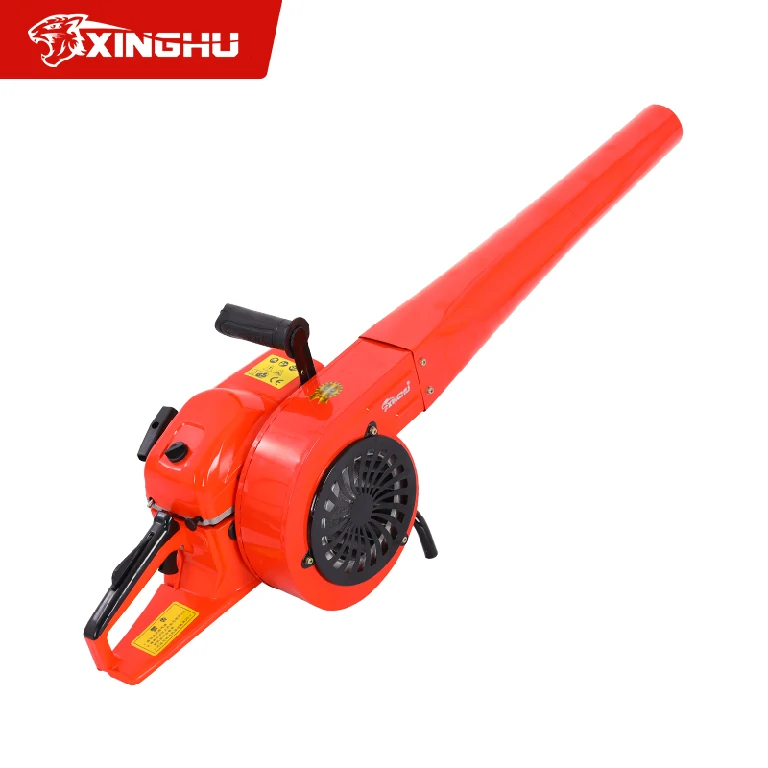
Xinghu offers different blower configurations for different application requirements. Buyers looking for a handheld leaf snow blower can review the relevant product range when comparing compact equipment for seasonal outdoor maintenance.
The right configuration depends on property size, operating duration, terrain, debris type, and user preference.
Gasoline vs Battery Power
Gasoline and battery-powered blowers involve different operating considerations.
Gasoline equipment can provide longer operation between refueling and suits applications where access to charging infrastructure is limited. However, fuel handling, engine maintenance, exhaust emissions, and local noise restrictions require attention.
Battery equipment can reduce direct exhaust emissions at the point of use and often produces less operating noise than comparable gasoline equipment. EPA guidance notes that battery-powered and electric lawn and garden equipment can offer lower pollution and noise compared with gas-powered alternatives.
For buyers comparing engine-powered options, a handheld gas leaf blower may suit applications where fuel-powered operation fits the expected workload and operating environment.
Commercial Selection Checklist
| Selection factor | Key question |
|---|---|
| Property size | How much ground must the operator clear per day? |
| Debris type | Are the materials dry leaves, wet leaves, grass, twigs, or mixed debris? |
| Surface | Will the machine operate on lawns, asphalt, concrete, gravel, or mulch? |
| Power source | Is gasoline or battery operation more practical? |
| Operating duration | How long will the blower run during each work cycle? |
| Machine configuration | Is handheld or backpack operation more suitable? |
| Noise requirements | Are there local restrictions or sensitive operating areas? |
| Emissions requirements | Does the target market regulate small-engine emissions? |
| Maintenance | Can the distributor or end user support routine servicing? |
| Supply requirements | Are spare parts, packaging, and technical support required? |
For garden machinery distributors and importers, product selection should also consider the regulations of the destination market. In the United States, leaf blowers fall within the category of small gasoline lawn and garden equipment covered by EPA emissions regulations.
What Are the Most Important Safety and Maintenance Practices?
Correct operation does not end when the leaves are cleared. Safe shutdown, cleaning, inspection, and maintenance help keep the equipment ready for the next work cycle.
Avoid Using a Blower for Hazardous Dust
A leaf blower is designed to move outdoor debris. It should not become a general-purpose compressed-air cleaning tool.
OSHA specifically warns that using a leaf blower to remove silica dust from clothing or PPE can disperse the dust and increase exposure. This example illustrates an important principle: the airflow that makes a blower effective for leaves can create a hazard when used on fine contaminated dust.
Operators should follow the site’s hazard-control procedures and use suitable dust collection equipment where required.
Maintain the Air Intake
The air intake should remain free from leaves, grass, plastic, and other debris. A blocked intake can reduce airflow and increase the load on the blower.
Stop the machine before clearing an obstruction. Never place hands near moving components while the machine operates.
Follow Engine Maintenance Requirements
Gasoline blowers require routine engine maintenance. Depending on the model, this can include air filter inspection, spark plug inspection, fuel system checks, lubrication, and other service tasks specified by the manufacturer.
EPA regulates emissions from small spark-ignition engines used in lawn and garden equipment, including leaf blowers. Manufacturers and importers should consider applicable emissions requirements when selecting equipment for a specific market.
Manage Batteries Correctly
Battery-powered blowers require correct charging and storage practices. Use the charger and battery system specified for the machine.
Inspect batteries for visible damage before use. Follow the manufacturer’s charging instructions and avoid using damaged battery packs.
Recent CPSC recall information also shows why battery management matters. In July 2026, CPSC reported a recall involving certain battery-powered yard tools because charging through a USB-C port could create a fire hazard.
The specific safety requirements vary by battery system, so users should always follow the equipment documentation.
Clean and Store the Machine
After completing the job, remove leaves and grass from the housing and air intake. Inspect the tube and controls before storing the blower.
For gasoline models, follow the manufacturer’s instructions for fuel storage and seasonal shutdown. Store the machine in a dry location away from ignition sources.
For battery models, follow the manufacturer’s recommended storage charge and temperature conditions.
A distributor serving professional landscaping customers should also provide clear maintenance documentation and spare-parts support. This can reduce downtime and make the equipment easier for contractors to maintain.
FAQ About Using a Leaf Blower
How do you use a leaf blower for the first time?
Start by reading the manufacturer’s operating instructions and checking the machine for visible damage. Clear people and fragile objects from the working area. Begin with a low or moderate airflow setting and test the blower on a small amount of debris. Adjust the airflow based on the material and surface.
What is the best way to use a leaf blower on wet leaves?
Wet leaves usually require more airflow because moisture increases their weight and makes them stick together. Move the nozzle slowly and use several passes instead of trying to move a large wet pile at once. If the material remains difficult to move, combine the blower with manual collection or another suitable tool.
Should I use maximum power when using a leaf blower?
No. Maximum airflow is not always the most efficient setting. Excessive airflow can scatter leaves, move gravel, disturb mulch, and create more dust. Start with the lowest effective setting and increase power only when necessary.
Can I use a leaf blower on gravel?
Yes, but use controlled airflow. Keep the nozzle farther from the surface and start with a lower setting. Watch for gravel movement and adjust the angle or airflow if stones begin to move with the leaves.
Can a leaf blower remove dust?
A leaf blower can move loose outdoor dust, but it should not replace appropriate dust-control equipment for hazardous or contaminated materials. OSHA specifically warns against using leaf blowers to remove silica dust from clothing or PPE because the airflow can disperse the dust.
How often should a leaf blower be maintained?
Maintenance frequency depends on the machine type, operating hours, environment, and manufacturer’s instructions. Commercial equipment used daily may require more frequent inspection than equipment used occasionally. Operators should inspect the blower before use and follow the specified service intervals for filters, spark plugs, fuel systems, batteries, and other components.
Is a gas or battery leaf blower better for commercial use?
Neither option is universally better. Gasoline models can suit long operating periods and locations where charging is difficult. Battery models can suit noise-sensitive areas and applications where reduced direct exhaust emissions are important. The decision should consider operating hours, property size, charging access, local regulations, maintenance, and total operating cost.
About Xinghu
Xinghu Power supplies garden machinery for distributors, importers, landscaping businesses, and professional outdoor equipment markets. Its product range covers leaf blowers and other garden machinery designed for different working conditions and market requirements. Xinghu supports customers with product selection, specifications, customization, and supply coordination for international markets. For buyers developing or expanding a garden machinery range, the appropriate blower configuration can be evaluated according to application, power source, performance requirements, target market, and order conditions.
References
U.S. Environmental Protection Agency. “Regulations for Emissions from Small Equipment & Tools.” EPA provides regulatory information for small spark-ignition engines used in lawn and garden equipment, including leaf blowers. EPA: Regulations for Emissions from Small Equipment & Tools
U.S. Occupational Safety and Health Administration. “A leaf blower should not be used to remove silica dust from clothing.” The guidance explains why forced air can disperse respirable dust and increase exposure. OSHA: Leaf Blower and Silica Dust Guidance
U.S. Environmental Protection Agency. “What You Can Do to Reduce Pollution from Vehicles and Engines.” The EPA provides guidance on lawn and garden equipment, including electric and battery-powered alternatives. EPA: Reduce Pollution from Vehicles and Engines
U.S. Consumer Product Safety Commission. “Leaf Blowers.” The CPSC provides current recall information related to leaf blower products and yard power equipment. CPSC: Leaf Blower Recalls