

Brush Cutter vs String Trimmer: Which Tool Fits Your Outdoor Equipment Business?
August 17, 2026
A brush cutter is generally the better choice for thick grass, weeds, brush, and dense vegetation, while a string trimmer works better for light grass and finishing work. The right choice depends on vegetation density, terrain, cutting requirements, operator workload, and expected operating hours. For B2B buyers, the decision also involves product positioning, engine or motor specifications, cutting attachments, ergonomics, maintenance, and target users. A landscaping contractor may need a high-output brush cutter for rough sites, while a homeowner or garden service provider may need a lighter trimmer for lawn edges. Buyers who supply complete garden machinery should also consider related equipment. A hedge trimmer, pole hedge trimmer, or professional hedge trimmer may complement brush-cutting equipment when customers maintain mixed landscapes.
What Is the Difference Between a Brush Cutter and a String Trimmer?
The main difference is cutting capability.
A string trimmer normally uses a flexible nylon line. It is designed for grass, lawn edges, weeds, and other relatively light vegetation.
A brush cutter can use stronger cutting attachments. These can include metal blades, brush knives, or other compatible cutting heads.
This gives it greater capability when dealing with thicker vegetation.
The distinction becomes important when selecting equipment for commercial users. A landscaping company may encounter grass, weeds, reeds, small shrubs, and dense vegetation during the same project.
One lightweight tool may not handle every condition efficiently.
A brush cutter can provide a broader operating range. A string trimmer can still provide better control for light trimming and edge finishing.
Cutting Applications
The following comparison provides a practical starting point for buyers.
| Factor | Brush Cutter | String Trimmer |
|---|---|---|
| Main cutting medium | Line, blade, or disc | Nylon line |
| Grass | Yes | Yes |
| Lawn edging | Yes | Yes |
| Dense weeds | Yes | Limited |
| Thick brush | Yes | No or limited |
| Small woody growth | Depending on blade | Generally unsuitable |
| Rough terrain | Suitable | Less suitable |
| Cutting power | Higher | Lower |
| Operator weight | Usually higher | Usually lower |
| Typical users | Landscaping and grounds teams | Garden maintenance users |
Caption: General differences between brush cutters and string trimmers.
These characteristics are not absolute. Product specifications vary by engine, motor, shaft, cutting attachment, and design.
For B2B buyers, the product’s intended application should guide the specification.
When Should Buyers Choose a Brush Cutter?
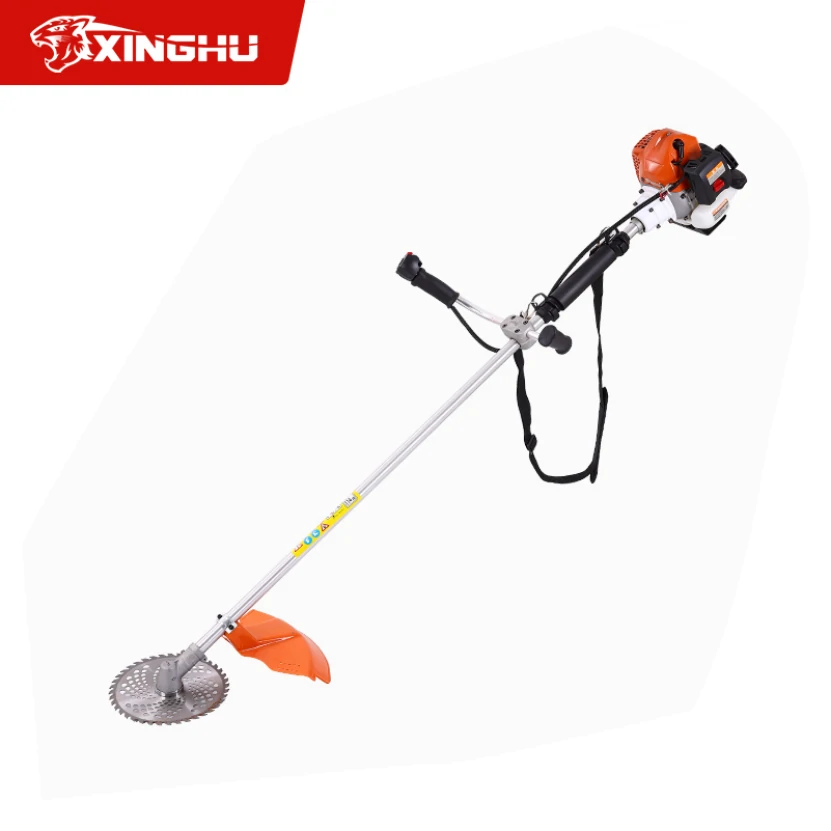
A brush cutter becomes more suitable when vegetation exceeds the practical range of a string trimmer.
This includes tall grass, dense weeds, reeds, rough vegetation, and some forms of light brush.
The cutting attachment plays an important role.
A nylon line works well for grass and soft vegetation. A metal blade can handle tougher material when the machine and blade are designed for that application.
The operator also needs appropriate protective equipment.
Heavy Vegetation and Rough Ground
Commercial landscaping sites often contain uneven ground.
A conventional lawn trimmer may struggle when vegetation grows densely across rough terrain.
A heavy duty brush cutter can provide greater cutting capacity for these conditions.
The higher-duty design may include a more powerful engine, reinforced components, stronger shaft construction, or larger cutting attachments.
However, buyers should not evaluate heavy-duty equipment by engine power alone.
The complete machine matters.
Important factors include:
- Engine displacement or motor power
- Shaft construction
- Gearbox design
- Cutting head compatibility
- Handle configuration
- Harness system
- Fuel consumption
- Vibration control
- Weight
- Maintenance access
These factors affect operator productivity during long working periods.
Commercial Landscaping
Landscaping contractors often value versatility.
A single site can include lawn edges, tall grass, weeds, and rough vegetation.
A brush cutter with interchangeable cutting attachments can address several of these conditions.
For example, an operator may use nylon line for grass around trees. The operator can then switch to a suitable blade for denser vegetation.
The correct attachment should always match the machine manufacturer’s specifications.
This flexibility can reduce the number of separate machines required for some maintenance tasks.
Does a Brush Cutter Replace a String Trimmer?
Not always.
The two machines overlap, but they serve different operating priorities.
A string trimmer provides precise cutting around lawn edges, fences, flower beds, paths, and other areas that require controlled trimming.
A brush cutter provides greater cutting capacity for rougher vegetation.
For a professional landscaping company, owning both can make sense.
The brush cutter handles demanding vegetation. The string trimmer handles finishing work.
This creates a two-stage maintenance approach.
Precision vs. Cutting Capacity
Consider a commercial property with a large lawn and several areas of dense weeds.
An operator could use a brush cutter to clear the rough areas first.
A string trimmer could then finish the lawn edges.
Using the right tool for each task can reduce unnecessary strain and improve work consistency.
This also creates a clearer product range for B2B distributors.
A supplier can position different machines according to application rather than treating every grass-cutting product as interchangeable.
Product Range Planning
For garden machinery distributors, the following product structure can work well:
- Entry-level string trimmers for light maintenance
- Mid-range brush cutters for general vegetation
- Heavy-duty brush cutters for commercial workloads
- Specialized cutting attachments
- Hedge trimmers for shrub maintenance
- Pole hedge trimmers for elevated hedges
This allows distributors to serve different customer groups without forcing one machine into every application.
A brush cutter machine can form the core of a vegetation-cutting range for buyers who need equipment beyond standard lawn trimming.
How Do Hedge Trimmers Compare With Brush Cutters?
Hedge trimmers serve a different purpose.
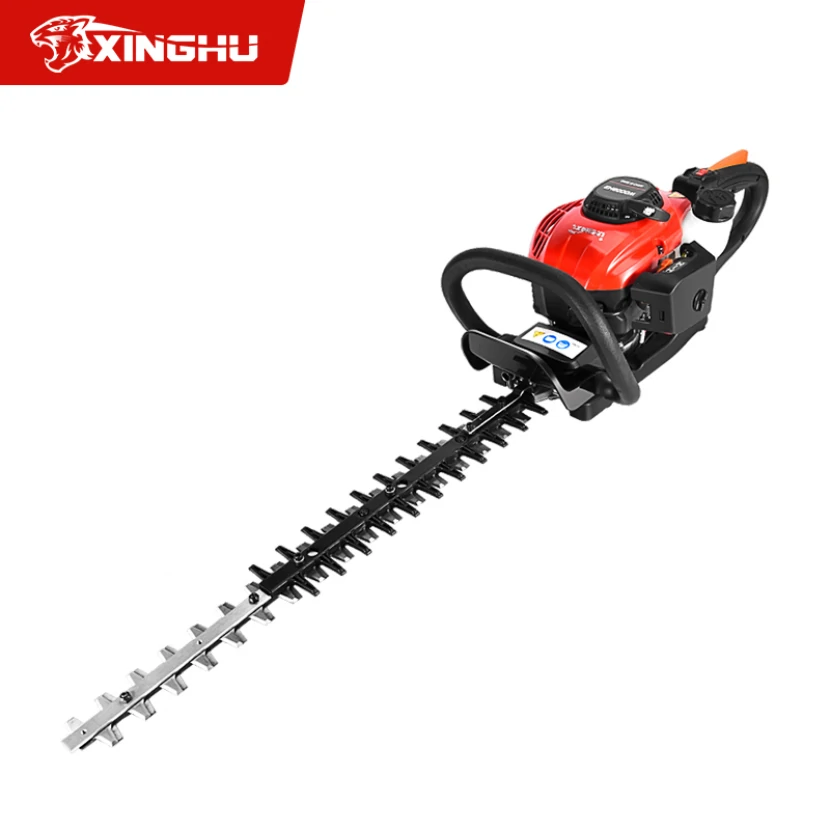
A brush cutter cuts grass, weeds, and rough vegetation near ground level. A hedge trimmer uses a reciprocating blade system to shape and maintain hedges and shrubs.
The cutting action suits branches and foliage within the tool’s specified cutting capacity.
For garden machinery distributors, these products often complement each other.
A landscaping contractor may use a brush cutter for ground vegetation and a hedge trimmer for shrubs.
This creates a broader equipment solution.
Standard Hedge Trimmer Applications
A standard hedge trimmer works well when the operator can reach the hedge directly.
Typical applications include:
- Residential hedges
- Garden borders
- Commercial landscaping
- Parks
- Property maintenance
- Shrub shaping
- Small ornamental hedges
The blade length and tooth spacing affect the cutting application.
A longer blade can cover more area per pass. However, a longer blade can also increase weight and affect handling.
Buyers should therefore balance cutting reach against operator control.
Pole Hedge Trimmer Applications
A pole hedge trimmer extends the operator’s reach.
It can help maintain taller hedges without requiring a ladder for many ground-based applications.
A hedge pole trimmer can be useful for professional landscaping teams that regularly maintain elevated hedges.
The pole length, head adjustment, balance, and overall weight all influence usability.
An excessively long machine may increase operator fatigue.
A shorter machine may provide better control but require more repositioning.
The right configuration depends on the hedge height and work environment.
What Should B2B Buyers Check Before Buying a Brush Cutter?
Product selection should begin with the target market.
A distributor selling to residential garden users needs a different product mix from a supplier serving landscaping contractors.
Professional customers may prioritize durability, cutting performance, spare parts, and long operating hours.
Retail customers may focus more on weight, ease of use, price, and basic functionality.
Engine and Power System
Petrol brush cutters remain common in commercial applications because they provide high mobility and do not depend on a power cable.
Battery-powered equipment continues to gain attention where low noise and reduced local emissions matter.
The power system affects:
- Runtime
- Weight
- Maintenance
- Noise
- Fuel or charging requirements
- Operating cost
- Starting method
For B2B buyers, the correct choice depends on customer requirements and local market conditions.
Shaft and Handle Design
Shaft design affects transmission efficiency and machine balance.
Straight shafts often provide good reach and can accommodate different cutting attachments.
Handle configuration also affects control.
Loop handles can suit lighter trimming work. Bicycle-style handles can provide greater control during extended cutting operations.
A harness can distribute machine weight across the operator’s body.
For commercial users, ergonomic design becomes more important as daily operating hours increase.
Cutting Attachments
A brush cutter can support different cutting heads depending on its design.
Common options include:
- Nylon line heads
- Grass blades
- Three-tooth blades
- Multi-tooth blades
- Other manufacturer-approved attachments
The attachment should match both the vegetation and the machine’s operating specifications.
A distributor should also ensure that replacement cutting components remain available.
How Can Buyers Compare a Brush Cutter for Sale?
When evaluating a brush cutter for sale, buyers should compare the complete specification rather than focusing on one headline feature.
Two machines may have similar engine displacement but differ significantly in shaft construction, gearbox design, weight, harness system, and cutting capacity.
A practical comparison should include:
| Specification | Why It Matters |
|---|---|
| Engine displacement | Indicates engine size for petrol models |
| Rated power | Helps compare cutting capability |
| Cutting width | Affects coverage per pass |
| Shaft type | Influences reach and transmission |
| Handle design | Affects operator control |
| Machine weight | Influences fatigue |
| Fuel tank capacity | Affects operating intervals |
| Cutting head | Determines vegetation compatibility |
| Blade options | Expands application range |
| Vibration control | Supports longer operation |
| Harness | Helps distribute machine weight |
| Spare parts | Supports long-term maintenance |
Caption: Key specifications for comparing brush cutters for commercial distribution.
Buyers should also request product testing information.
A machine may look suitable on paper but perform differently under real operating conditions.
Field tests can reveal starting performance, vibration, cutting stability, fuel consumption, and operator handling.
What Makes a Professional Hedge Trimmer Suitable for Commercial Users?
A professional hedge trimmer needs to support repeated operation.
Commercial landscaping teams may use hedge trimmers for several hours each day during busy seasons.
This makes durability and ergonomics important purchasing factors.
The machine should provide suitable cutting performance while remaining manageable for the operator.
Blade Configuration
Blade length affects productivity.
A longer blade can cover more hedge surface with each movement.
However, longer blades can increase overall weight.
Tooth spacing also matters.
Small tooth spacing can suit finer foliage. Larger spacing can provide more clearance for thicker branches within the machine’s rated cutting range.
The buyer should therefore match blade design with customer applications.
Adjustable Cutting Head
An adjustable head can improve access to different hedge angles.
The operator can change the cutting position without repeatedly changing body position.
This can be useful when working on the top and sides of tall hedges.
However, the adjustment mechanism should maintain sufficient rigidity during operation.
A distributor should evaluate both adjustment range and locking reliability.
Weight Distribution
Weight distribution can have a significant effect on long-term usability.
Two machines with the same total weight may feel different because their weight sits in different positions.
Pole-mounted machines require particular attention.
The motor position, shaft length, cutting head, and balance point all influence operator fatigue.
For professional users, these details can affect daily productivity.
How Should Distributors Build a Garden Machinery Product Portfolio?
B2B buyers often need a product range rather than one individual machine.
A well-planned portfolio should cover different customer applications.
For example, a distributor can organize products by vegetation type and operating environment.
Suggested Product Positioning
A basic portfolio might include:
| Customer Need | Recommended Product |
|---|---|
| Lawn edge trimming | String trimmer |
| Tall grass | Brush cutter |
| Dense weeds | Brush cutter with suitable blade |
| Rough vegetation | Heavy-duty brush cutter |
| Low hedges | Standard hedge trimmer |
| Tall hedges | Pole hedge trimmer |
| Long commercial operation | Professional hedge trimmer |
| Mixed landscaping work | Brush cutter + hedge trimmer range |
Caption: Example product positioning for a garden machinery distribution portfolio.
This approach helps customers select equipment according to actual work.
It also reduces confusion between products with overlapping functions.
Match Products With Local Demand
Market conditions vary by region.
Some markets have strong demand for petrol-powered equipment. Others increasingly prefer battery-powered tools.
Terrain also matters.
Urban garden maintenance may prioritize low noise and easy handling.
Rural and agricultural applications may require greater cutting capacity.
Distributors should therefore analyze customer requirements before choosing product specifications.
How Can Buyers Evaluate Supplier Reliability?
The machine is only one part of a B2B purchase.
Supplier capability also affects the long-term value of the product range.
Buyers should evaluate manufacturing consistency, quality control, spare parts, packaging, documentation, and technical support.
Quality Control
A suitable quality-control process should cover incoming components, assembly, machine testing, and final inspection.
For brush cutters, checks may include:
- Engine or motor performance
- Starting function
- Throttle response
- Gearbox operation
- Shaft alignment
- Cutting head rotation
- Vibration
- Safety controls
- Fuel system
- Final assembly
For hedge trimmers, testing may cover blade movement, cutting performance, head adjustment, throttle control, vibration, and safety functions.
The exact inspection process should match the product.
Spare Parts and After-Sales Support
Garden machinery requires consumable and replacement components.
Examples include cutting lines, blades, air filters, spark plugs, fuel-system components, gear parts, and other wear items.
Commercial distributors should confirm spare parts availability before placing large orders.
A reliable supply of replacement components can reduce customer downtime.
This also helps distributors build longer-term relationships with professional users.
FAQ About Brush Cutters and String Trimmers
What is the main difference between a brush cutter and a string trimmer?
A string trimmer generally uses nylon line for grass and light weeds. A brush cutter can use stronger cutting attachments and handle thicker vegetation.
Is a heavy duty brush cutter better for commercial landscaping?
It can be more suitable for demanding workloads and dense vegetation. Buyers should still consider weight, ergonomics, maintenance, and actual cutting requirements.
Can a brush cutter replace a string trimmer?
It can perform some of the same tasks, but it may not provide the same convenience for precision trimming. Many professional users benefit from having both tools.
What is a hedge trimmer used for?
A hedge trimmer is designed to shape and maintain hedges and shrubs. It uses reciprocating blades rather than a rotating cutting head.
When should I choose a pole hedge trimmer?
A pole hedge trimmer is useful when operators need additional reach for taller hedges. The correct length depends on hedge height and working conditions.
What should I look for in a professional hedge trimmer?
Consider blade length, tooth spacing, cutting capacity, weight, balance, head adjustment, vibration control, and maintenance requirements.
What specifications matter when buying a brush cutter for sale?
Key specifications include power, engine displacement, cutting width, shaft design, machine weight, handle configuration, cutting attachments, fuel capacity, and spare parts support.
Are brush cutters suitable for rough terrain?
Yes, many brush cutters suit rough terrain and dense vegetation. The machine and cutting attachment must match the application.
Should distributors buy different brush cutter models?
A product range can help distributors serve different customer segments. Entry-level, general-purpose, and heavy-duty models can address different workloads.
Why should B2B buyers consider spare parts before ordering?
Brush cutters and hedge trimmers contain components that wear during regular operation. Reliable spare parts availability helps distributors support customers after the initial sale.
Why Choose Xinghu for Garden Machinery?
Xinghu provides garden machinery solutions for distributors and professional users seeking equipment for grass cutting, vegetation management, and hedge maintenance. Its product range includes brush cutters and hedge trimmers designed for different applications. For B2B buyers, Xinghu focuses on practical product specifications, application requirements, quality control, and ongoing product support. Whether the requirement involves a general brush cutter, a heavy-duty model, or equipment for hedge maintenance, the selection should begin with the customer’s actual working conditions. This application-based approach helps distributors build a product range that matches different vegetation types, operating environments, and user requirements.
References
The U.S. Consumer Product Safety Commission provides business guidance for manufacturers, importers, and distributors of consumer products in the United States. The Occupational Safety and Health Administration provides workplace safety information related to landscaping equipment and outdoor power equipment. The European Commission provides information on machinery requirements within the European Union. These sources can help B2B buyers evaluate applicable product safety, machinery, and workplace requirements when selecting garden machinery for different markets.