

Electric vs Gasoline Lawn Mower: Which Power Source Drives Better ROI for Garden Equipment Distributors?
June 24, 2026
Global garden equipment distributors face a significant shift in buying behavior as commercial landscapes and regulatory frameworks evolve. The choice between electric vs gasoline lawn mower options is no longer just about environmental preferences, but it directly impacts import margins, maintenance supply chains, and market adaptability. The definitive answer for international buyers depends on your target market segmentation, but currently, a balanced portfolio provides the highest return on investment. While electric models capture the rapidly growing residential and urban contractor segments due to emissions regulations, gasoline mowers remain indispensable for heavy-duty, high-acreage commercial operations. This comprehensive analysis evaluates the technical performance, total cost of ownership, and regional market demands of both power systems to help procurement managers optimize their bulk inventory strategies.
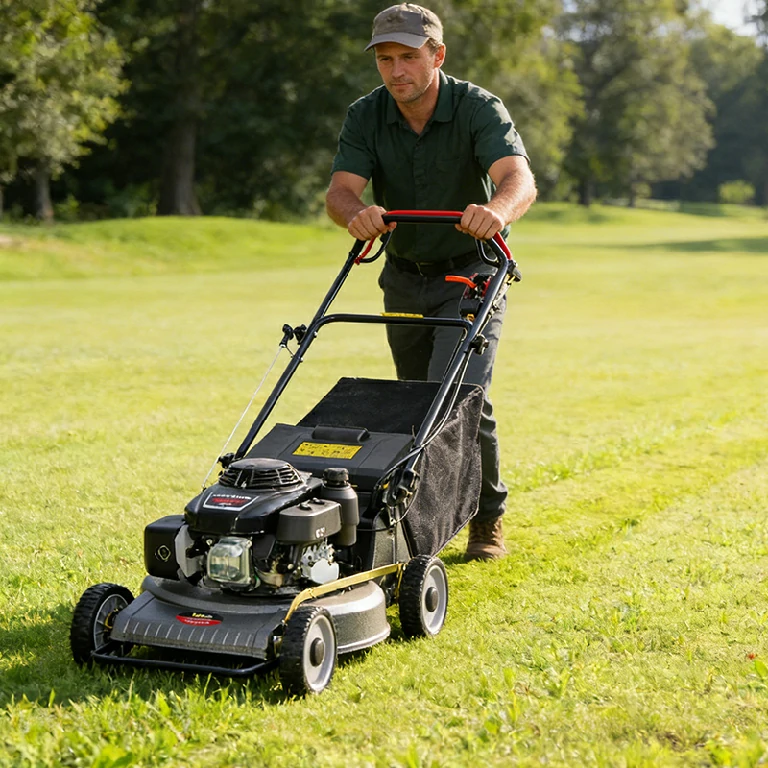
Why Are Fleet Buyers Re-Evaluating the Electric vs Gasoline Lawn Mower Balance Today?
The global outdoor power equipment market is experiencing unprecedented disruption driven by battery technology breakthroughs and strict emissions mandates. For decades, traditional liquid fuel systems dominated industrial and residential landscaping sectors worldwide. Today, government incentives and municipal noise ordinances in North America and Western Europe force landscape contractors to reconsider their equipment fleets. Importers must align their purchasing cycles with these shifting procurement criteria to avoid dead stock.
Commercial buyers prioritize equipment longevity, daily operational runtime, and initial procurement discounts when choosing their primary inventory lines. While gasoline units offer familiar mechanics and instant refueling capabilities, advanced lithium-ion battery platforms now match the horsepower of small internal combustion engines. Understanding the structural differences in manufacturing and field reliability helps distributors advise their commercial clients effectively.
Technical Breakdown: Torque, Runtime, and Durability Under Commercial Workloads
Torque delivery differs fundamentally between internal combustion engines and brushless electric motors, altering how each machine handles dense, wet grass. Gasoline engines rely on a displacement-based power curve, meaning they require time to reach optimal revolutions per minute under heavy loads. Electric motors deliver instantaneous maximum torque the moment the operator engages the blade system, which prevents clogging and maintains clean cutting performance.
However, operational runtime remains a limiting factor for battery-powered machinery in large-scale operations. A single tank of fuel allows a commercial operator to work continuously for several hours, and refueling takes less than five minutes. In contrast, heavy-duty battery packs require extensive charging infrastructure, or substantial capital investment in spare swappable batteries to match a standard eight-hour workday.
Equipment durability also influences the decision-making process for enterprise buyers who manage large rental or municipal maintenance fleets. Gasoline machinery utilizes robust steel casings, mechanical carburetors, and heavy drive shafts that tolerate physical abuse and poor weather conditions. Electric variants feature sensitive electronic control units, battery management systems, and wiring harnesses that demand superior weatherproofing and careful handling during transport.
Total Cost of Ownership Analysis for Wholesale Procurement Managers
Wholesale buyers must evaluate both the upfront acquisition cost and the long-term operational expenses when calculating prospective profit margins. Gasoline-powered machinery generally features a lower initial purchase price, making it highly attractive for budget-conscious markets and traditional retail networks. However, the ongoing expenses associated with fuel, spark plugs, engine oil, belt replacements, and air filters accumulate significantly over a three-year operational lifecycle.
Battery-powered equipment demands a premium initial investment, primarily driven by the cost of high-capacity cells and rapid charging stations. Despite this hurdle, operating costs drop drastically because electricity is cheaper than fossil fuels, and brushless motors eliminate almost all routine powertrain servicing. Distributors can leverage these long-term savings projections to justify higher wholesale prices to commercial landscaping businesses.
Comprehensive Financial and Performance Matrix
| Performance and Cost Metric | High-Output Gasoline Systems | Advanced Lithium-Ion Battery Systems |
| Upfront Wholesale Unit Cost | Moderate to Low | High to Very High |
| Routine Component Maintenance | High (Belts, Filters, Spark Plugs) | Minimal (Blade Sharpening Only) |
| Continuous Operational Runtime | High (Infinite with quick refueling) | Medium (Dependent on battery capacity) |
| Average Equipment Lifespan | 5,000+ Hours with proper service | 2,000 to 3,000 Battery Charge Cycles |
| Weather and Impact Resistance | High (Robust mechanical build) | Medium (Sensitive electronic circuit boards) |
| Unit Depreciation Rate | Predictable secondary market value | Fast due to evolving battery tech |
Table 1: Technical and financial comparison between commercial-grade gasoline and electric propulsion systems for international procurement decision-making.
Market Segmentation: Matching Power Sources to Regional Customer Demands
Demographic variations dictate whether your business should import battery packs or internal combustion machinery for your regional distribution hubs. Urban centers with high population densities and strict noise control laws show an overwhelming preference for quiet, zero-emission machinery. Suburban markets with mixed property sizes require versatile tools that balance runtime with user-friendly operation.
To maximize inventory turnover, wholesale buyers must align their product acquisition with specific regional profiles:
- Urban and Premium Residential Hubs: Ideal for residential lawn mowing lines where strict emission limits and noise curfews exist.
- Commercial Landscaping Networks: Require heavy battery setups or hybrid solutions to handle daily commercial property management contracts.
- Agricultural and Remote Rural Districts: Highly dependent on a rugged gasoline lawn mower lineup due to the lack of charging infrastructure.
Evaluating these distinct target landscapes ensures that your procured machinery matches the purchasing capabilities and practical needs of your regional dealerships.
Supply Chain Logistics and Safety Standards for Industrial Importers
Shipping international freight containing large-scale lithium-ion batteries presents distinct logistical challenges that do not apply to standard mechanical equipment. Battery packs exceeding 100 watt-hours fall under Class 9 hazardous materials regulations for ocean and air transportation. Importers must budget for specialized certification costs, strict packaging requirements, and potential delays at customs checkpoints.
B2B procurement teams must carefully evaluate these three primary logistical constraints when planning seasonal stock orders:
- Hazardous Cargo Compliance: Lithium batteries require specific UN-approved packaging and detailed safety data sheets for customs clearance.
- Freight Insurance Premiums: Transporting battery-powered machinery involves higher risk assessments, increasing overall shipping and warehousing insurance costs.
- Component Supply Stability: Mechanical parts enjoy diverse worldwide sourcing options, whereas battery cells depend on concentrated chemical processing hubs.
If you are looking to optimize your product mix with high-margin outdoor equipment, please Contact Us for Wholesale Lawn Care Equipment Pricing to speak with our international trade experts.
Engineering Efficiency: The Role of Drive Systems in Commercial Operations
The efficiency of a cutting deck relies heavily on the underlying drive mechanism that moves the chassis across uneven terrain. Pushing a heavy machine across expansive properties exhausts operators and lowers daily productivity rates significantly. For this reason, commercial fleet buyers prioritize self-propelled mechanisms that handle the physical workload automatically.
Integrating a self-propelled system with a battery powertrain requires sophisticated dual-motor engineering to prevent rapid voltage drops. One dedicated motor turns the cutting blade while a separate, high-efficiency motor drives the transaxle assembly. This setup ensures consistent forward speed without sacrificing the rotational velocity of the cutting blade when encountering dense weeds.
Gasoline engines utilize a system of pulleys, tensioner belts, or hydraulic pumps connected directly to the main crankshaft. This traditional mechanical link provides immense pushing power, making a self propelled lawn mower driven by fuel highly effective on steep inclines and rough fields. Importers must evaluate these mechanical differences to ensure their inventory matches the geographical terrain of their local buyers.
Frequently Asked Questions Regarding Wholesale Lawn Mower Procurement
How long do commercial lithium-ion batteries last before requiring replacement?
Commercial-grade lithium cells typically retain eighty percent of their original capacity after two thousand full charge cycles. For standard landscaping operations, this performance translates to approximately five years of reliable daily service before fleet managers need to budget for pack replacement.
Can battery-operated machinery perform safely in heavy rain conditions?
High-quality manufacturers engineer commercial electric machinery with IPX4 or IPX5 ingress protection ratings to resist water splashes from any direction. However, operating electric machinery in torrential downpours remains risky due to potential moisture accumulation inside electronic control modules.
What is the average lead time for bulk orders of garden machinery spare parts?
Standard industrial lead times for bulk component shipments range between thirty and forty-five days depending on component complexity. Specialized electronics and custom battery management systems may require longer lead times during peak global manufacturing seasons.
Partner with Xinghu: Your Trusted Manufacturing Ally for High-Performance Outdoor Power Equipment
Xinghu delivers precision-engineered outdoor power equipment and premium mechanical components to distributors, wholesalers, and OEM partners across Europe, North America, and Southeast Asia. We operate advanced manufacturing facilities that implement rigorous quality control systems at every stage of the production cycle. Our extensive product portfolio bridges the gap between traditional mechanical reliability and modern efficiency standards, ensuring your business stays competitive. By selecting Xinghu as your primary supply chain partner, you gain access to comprehensive technical support, reliable parts availability, and scalable production capacities tailored to your precise market needs.
References
- Outdoor Power Equipment Institute (OPEI) Industry Market Reports: https://www.opei.org/
- European Garden Machinery Industry Federation (EGMF) Technical Standards: https://www.egmf.org/