





4 Stroke Leaf Blower
-
Separated Oil Crankcase: Operates on straight unleaded pump gasoline. Consequently, it completely eliminates the need to calculate or pre-mix two-stroke oil.
-
Persistent Low-End Torque: Engineered to maintain steady, high-volume air velocity even when sweeping heavy, wet debris fields.
-
Muted Low-Frequency Acoustic Profile: Advanced internal mufflers change sharp whines into a lower tone, satisfying strict urban noise codes easily.
-
Inquire Factory Pricing: Supply your regional tool network with eco-compliant, high-torque commercial blowers. Contact us for the latest quote.
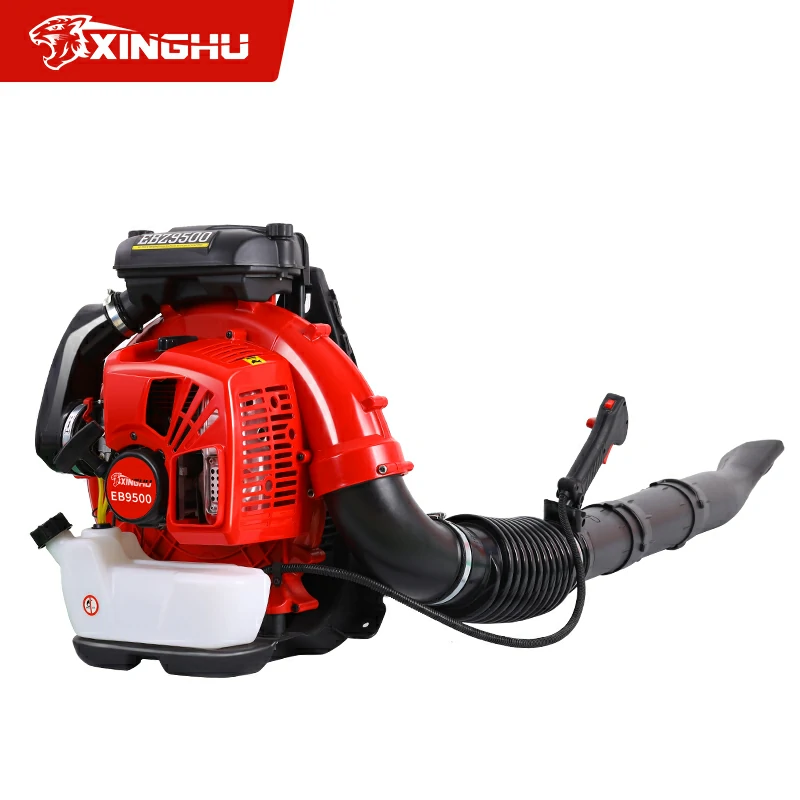
4 stroke leaf blower is a petrol-powered clearing tool driven by an internal combustion engine. Specifically, the engine executes a complete thermodynamic power cycle across four separate piston strokes: intake, compression, power, and exhaust. Legacy utility engines mix two-stroke oil into the fuel tank directly. In contrast, a four-stroke architecture separates the combustion chamber from the crankcase oil reservoir completely.
The physical operation coordinates a precision camshaft with the engine’s main crankshaft:
-
The Clean Combustion Cycle: The intake stroke draws pure petrol vapor into the cylinder chamber. Meanwhile, the compression stroke seals the overhead valves tightly to compress the mixture.
-
Independent Pressurized Lubrication: A dedicated oil sump holds standard automotive motor oil separately. Therefore, an internal slinger continuously coats the cylinder walls and piston pins during runtime.
-
Aerodynamic Impeller Propulsion: The engine crankshaft couples directly to a high-velocity centrifugal fan assembly. Consequently, as the engine revs up, the fan draws ambient air in and forces it out through a tapered sweep tube.
Therefore, this mechanical separation simplifies field refueling logistics significantly for large crews. Because operators run these units on straight unleaded pump gasoline, they avoid catastrophic engine seizures caused by incorrect manual fuel mixing.
Key Benefits of 4 Stroke Leaf Blowers
Flat and Persistent Torque Curves
Four-stroke engines generate excellent low-end rotational torque at lower operational RPMs. When sweeping heavy debris or wet, matted leaves, the engine maintains its high air volume consistently. Therefore, this persistent blowing force allows crews to clear large parking lots rapidly without needing to constantly redline the throttle.
Streamlined Field Refueling Logistics
In large-scale commercial land management operations, complex refueling logistics frequently cause human error. Crew members often miscalculate mixture ratios or accidentally pour pure gasoline into two-stroke tanks. However, a 4-stroke machine runs on straight unleaded pump gasoline. Consequently, it simplifies fleet management and reduces mechanical downtime.
Drastically Reduced Exhaust Emissions
Because a 4-stroke engine does not burn motor oil during its standard combustion cycle, it operates cleanly. The complete internal combustion process substantially decreases unburnt hydrocarbons and toxic exhaust smoke. As a result, it creates a much safer breathing environment for the operator during long clearing shifts.
Elite Fuel Consumption Metrics
The precise mechanical valve timing of a 4-stroke system ensures maximum thermal efficiency. No unburnt gasoline escapes through the exhaust port during the compression stroke. Therefore, this efficient profile reduces hourly fuel consumption by up to 30% compared to two-stroke alternatives, allowing landscaping crews to run extended field shifts economically.
Muted and Low-Frequency Acoustic Output
Advanced multi-chamber mufflers and balanced internal counterweights alter the acoustic signature of 4-stroke designs. They transform high-pitched, piercing whines into a lower-frequency, muted tone. Therefore, this lower decibel rating reduces operator ear fatigue and easily satisfies strict local noise regulations in urban zones.
Commercial Applications
Urban Municipal Property Cleaning
Public works departments manage expansive civic plazas, park walkways, and public brick courtyards regularly. A 4 stroke leaf blower provides the precise volumetric airflow needed to clear trash, grass clippings, and debris efficiently. Furthermore, its clean-burning engine permits safe operation near public buildings without filling the air with heavy exhaust smoke.
School and Hospital Groundskeeping
Educational campuses and healthcare facilities enforce strict acoustic limits to preserve a quiet environment. Landscaping crews utilize low-noise 4-stroke blowers to clean parking decks and pedestrian pathways early in the morning. Therefore, they finish their clearing duties rapidly without disrupting students or patients.
Premium Golf Course Fairway Maintenance
Golf course superintendents must keep cart paths and putting greens completely free of organic debris. The smooth, low-vibration operation of 4-stroke units allows turf crews to sweep long paths comfortably. Consequently, they maintain pristine course aesthetics while reducing physical hand-arm vibration strain during multi-hour shifts.
Technical Architecture and Structural Specifications
Matching the proper structural layout to your target market requires a clear understanding of 4-stroke weight-to-power parameters:
| Blower Structural Format | Average Displacement | Air Velocity Output (Max) | Primary Target Application | Operator Portability Index |
| Straight-Tube Handheld | 25 CC – 31 CC | 150 MPH (240 km/h) | Cleaning residential decks, driveways, flower beds. | High; lightweight chassis balances in one hand. |
| Commercial Backpack Unit | 35 CC – 50 CC | 200 MPH (320 km/h) | Clearing large parking lots, autumn leaves, parks. | Exceptional; thick padded harness supports weight. |
| Heavy-Duty Professional | 53 CC+ Industrial | 230 MPH (370 km/h) | Massive sports stadiums, industrial land reclamation. | Medium; requires heavy dual-shoulder load distribution. |
Airstream Management Implement Options
To deliver maximum versatility across variable properties, professional 4-stroke lines utilize specialized nozzle shapes:
High-Velocity Concentrator Nozzles
These tapered plastic attachments narrow the exit diameter of the blower tube significantly. Consequently, they compress the air stream to blast heavy, wet leaves and stubborn mud off asphalt surfaces easily.
Wide-Sweep Flared Nozzles
Designed specifically for expansive turf zones, these wide tips spread the air volume horizontally. Therefore, they allow operators to sweep a wider path of loose dry leaves in a single walking pass.
Why Choose Us as Your 4 Stroke Leaf Blower Supplier
Precision Engineered Components
Our manufacturing facility integrates advanced automated CNC machinery to fabricate precision overhead valves and balanced crankshafts. This high-tolerance production ensures that our commercial leaf blower lines maintain optimal cylinder compression through years of field service.
Comprehensive B2B Wholesale Customization
We provide global distributors with extensive OEM and ODM support for volume container orders. For instance, our engineering team can adapt air shroud shapes, modify tube lengths, and apply private-label branding. Contact our export sales team today to secure custom factory configurations and bulk wholesale pricing options.
Frequently Asked Questions
Does a 4-stroke leaf blower require special oil to be added to the gasoline?
No, it does not. A 4-stroke leaf blower runs on straight, clean unleaded gasoline. It features a dedicated internal oil crankcase, similar to an automobile. Therefore, it eliminates the need to mix two-stroke oil into the fuel tank.
Can a 4-stroke backpack blower be operated at steep angles?
Yes, absolutely. Our advanced 4-stroke engines utilize specialized multi-position lubrication circuits. These systems ensure consistent internal oil misting regardless of the operating angle, allowing for safe use on steep drainage slopes.
What routine maintenance does a 4-stroke blower fleet require?
Routine maintenance includes checking the engine oil level before shifts and changing the crankcase oil periodically. Furthermore, operators must clean the air filter element and check the spark plug gap to ensure optimal fuel economy.